





4th June 2026, Thursday

Rangmanch House / PMA madhushala

A multigenerational home in Solapur, India inspired by music and heritage.

Project Name : Rangmanch House
Project Location : Solapur, India
Architect/Interior Designer : PMA madhushala
Design Team : Rohan Panvel, Divya Jyoti, Prasanna Morey

Photographer: Hemant Patil

Set on a 355 sq m plot in Solapur, Rangmanch House by PMA Madhushala is a residence designed for a close knit multigenerational family comprising a couple, their two children, and aging parents. While the home responds to practical requirements and Vastu principles, its deeper narrative emerges from an unexpected source: the family’s shared love for classical music. This passion inspired the inclusion of dedicated spaces for practice and performance, transforming the house into more than a dwelling. It becomes a stage for everyday life, creativity, and togetherness.

The design evolved through a careful negotiation between the family’s aspirations and the realities of the site. While the south western edge of the plot enjoyed openness and favorable views, the northern and eastern boundaries were constrained by surrounding development. The architects initially envisioned the home as an L shaped volume that embraced privacy along the north and east while opening generously toward the south west through verandahs and landscaped gardens.

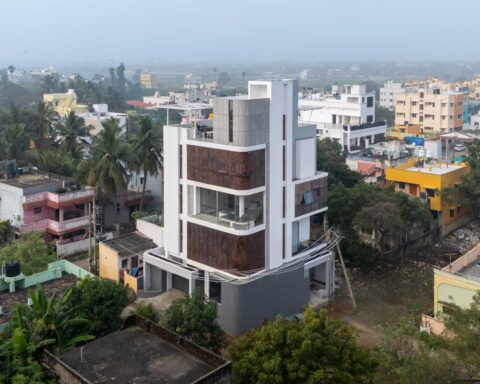
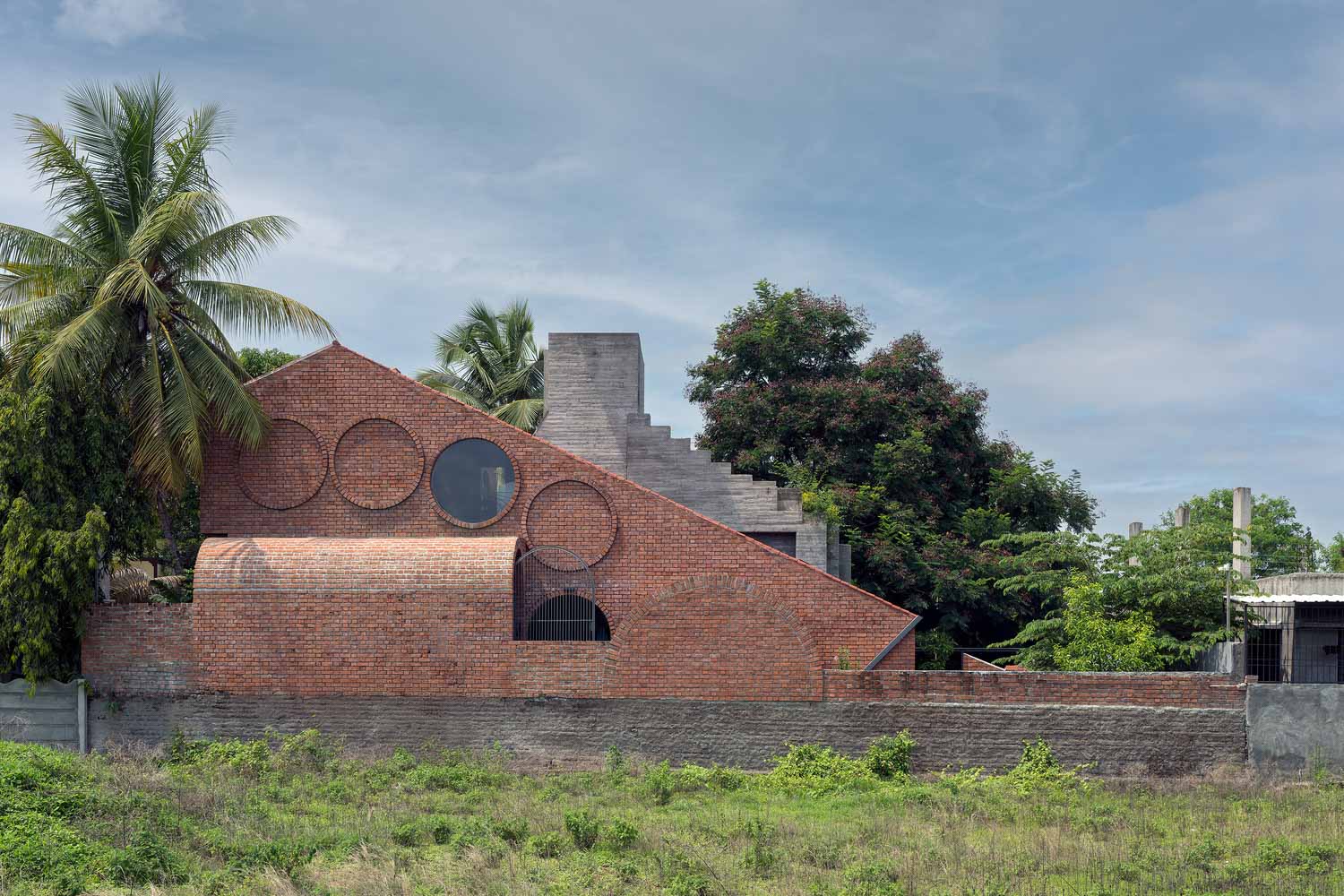
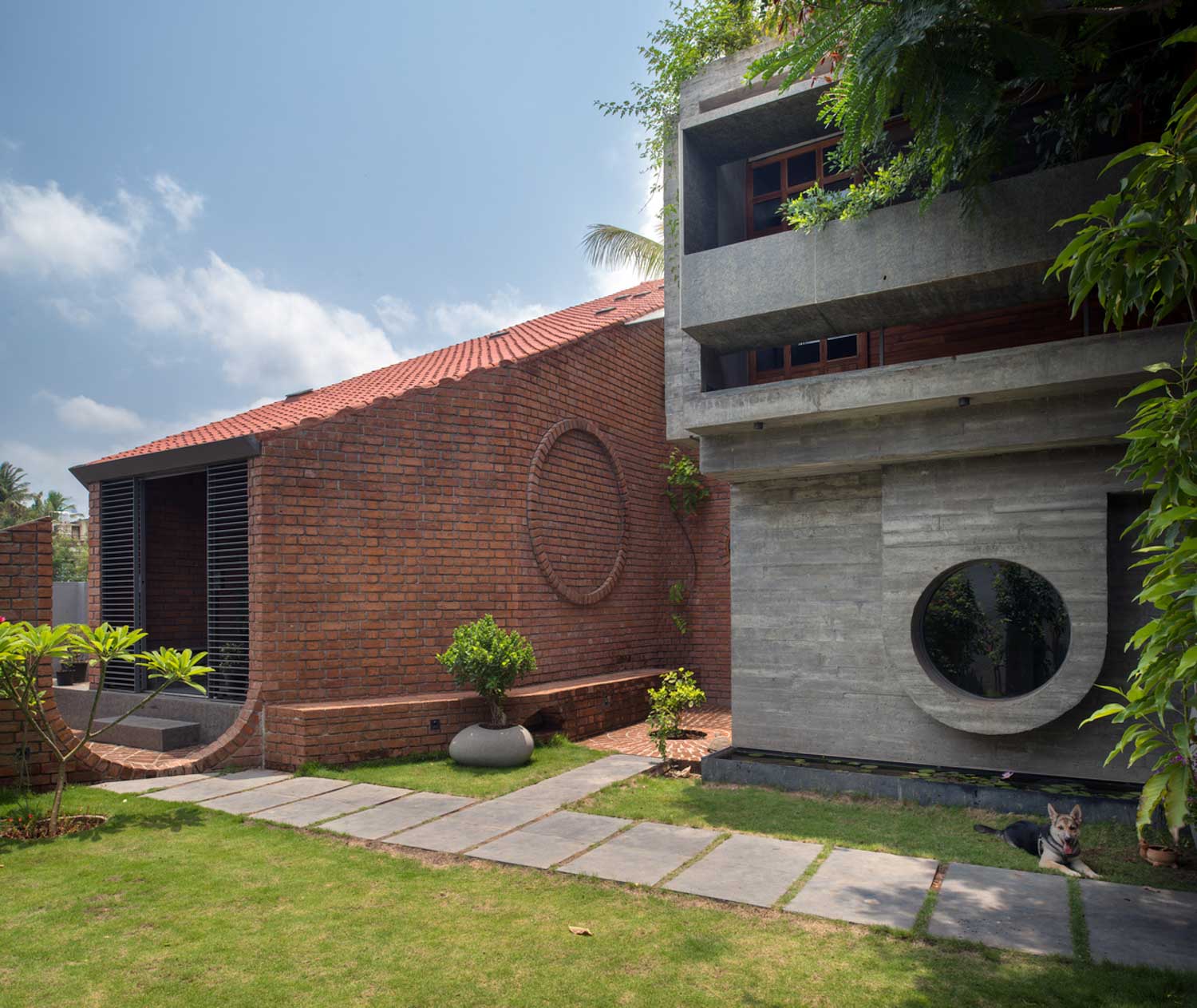
However, the family’s strong commitment to Vastu led to a significant shift in the design. The insistence on locating the primary bedroom in the south western corner resulted in the introduction of a distinct cuboidal volume. This addition transformed the composition into a dialogue between two architectural forms: the original L shaped block and a more solid concrete volume. Together, they create a layered spatial arrangement that gives the house its unique character.

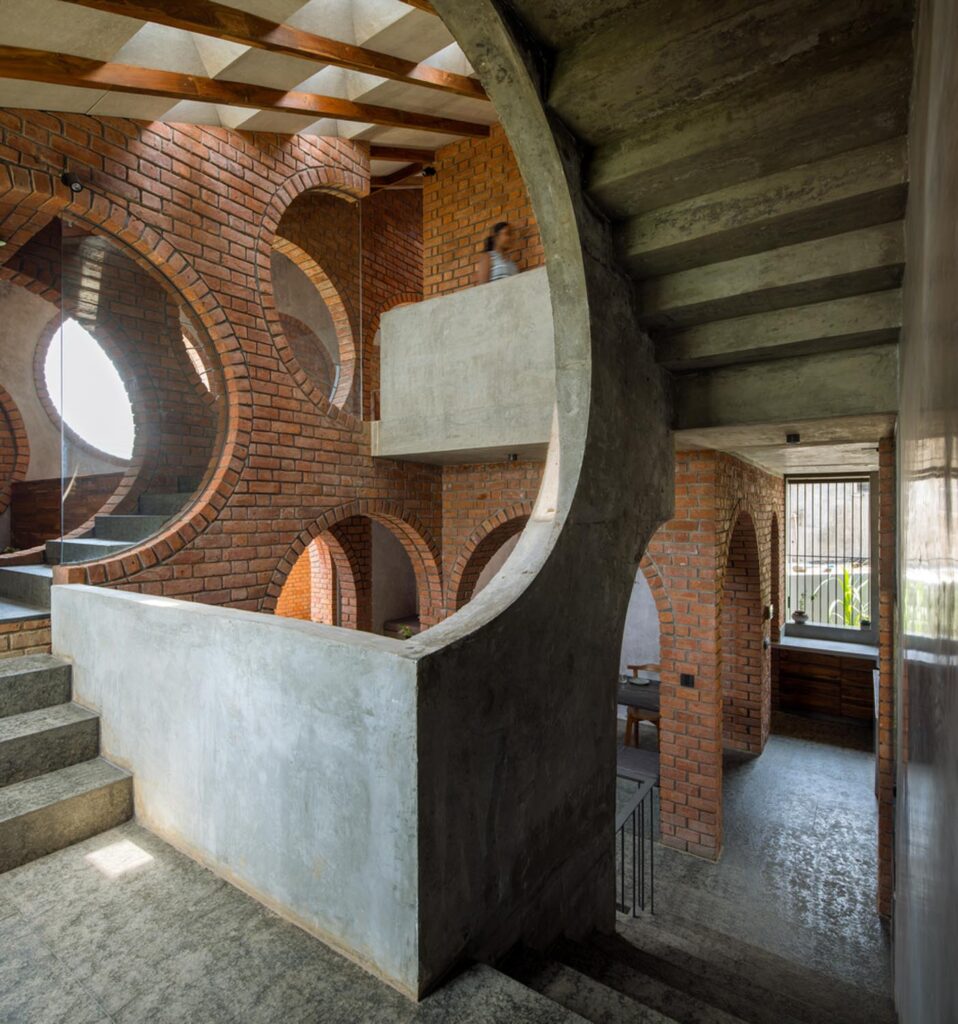
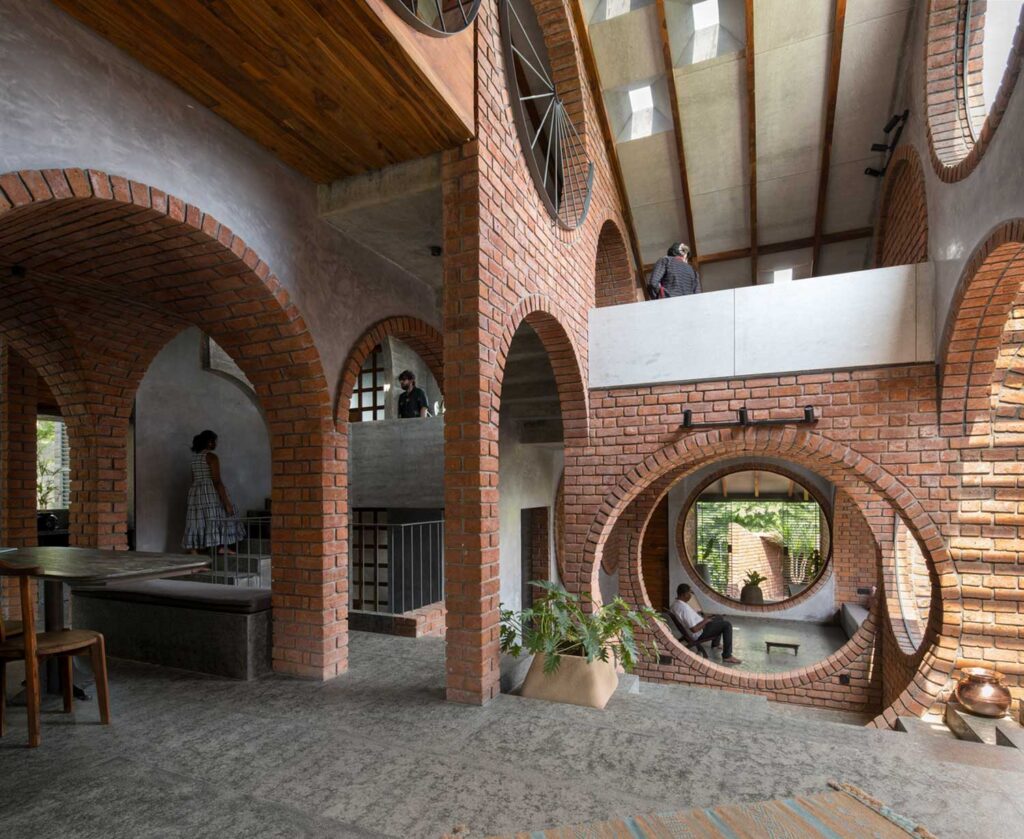
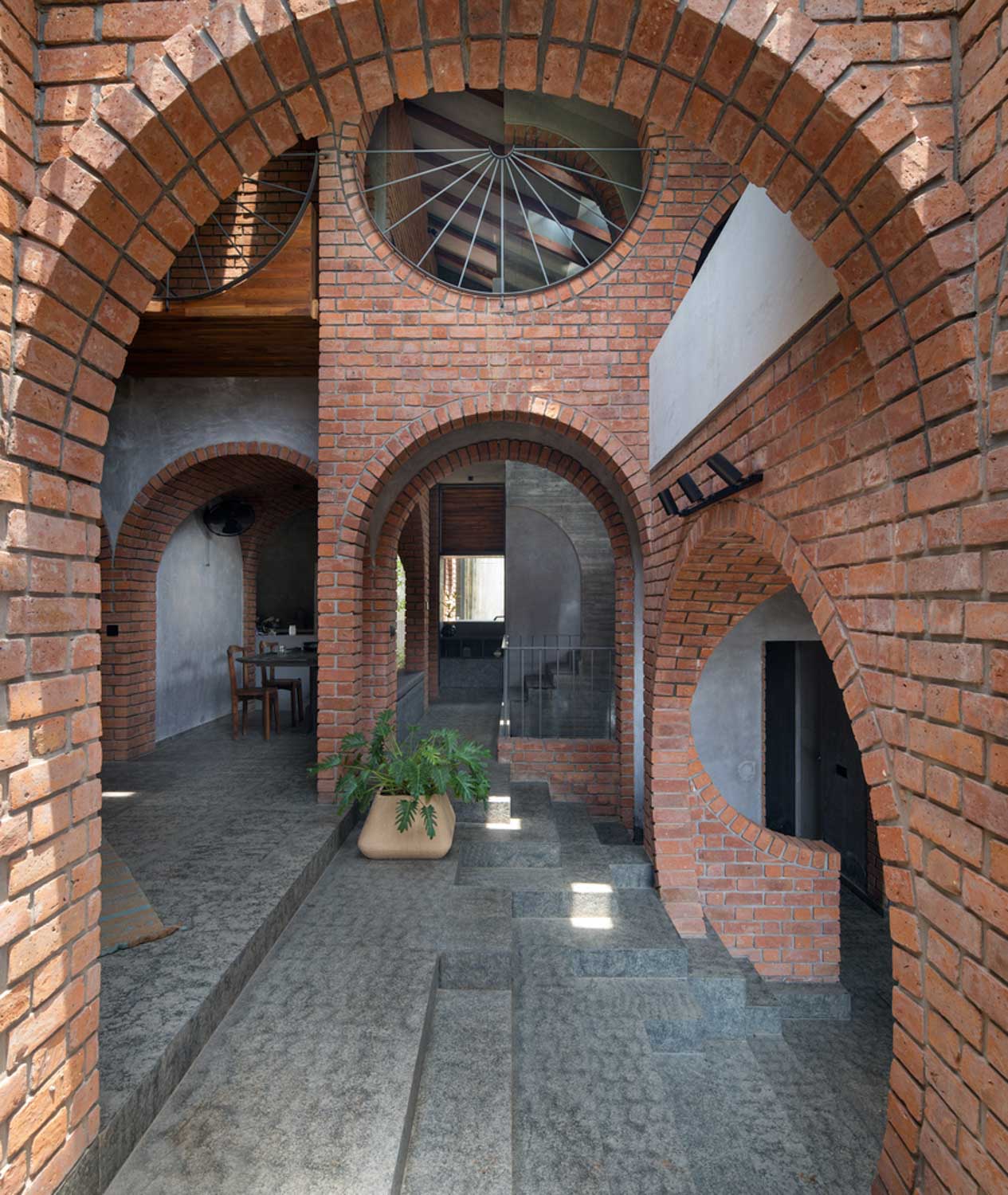
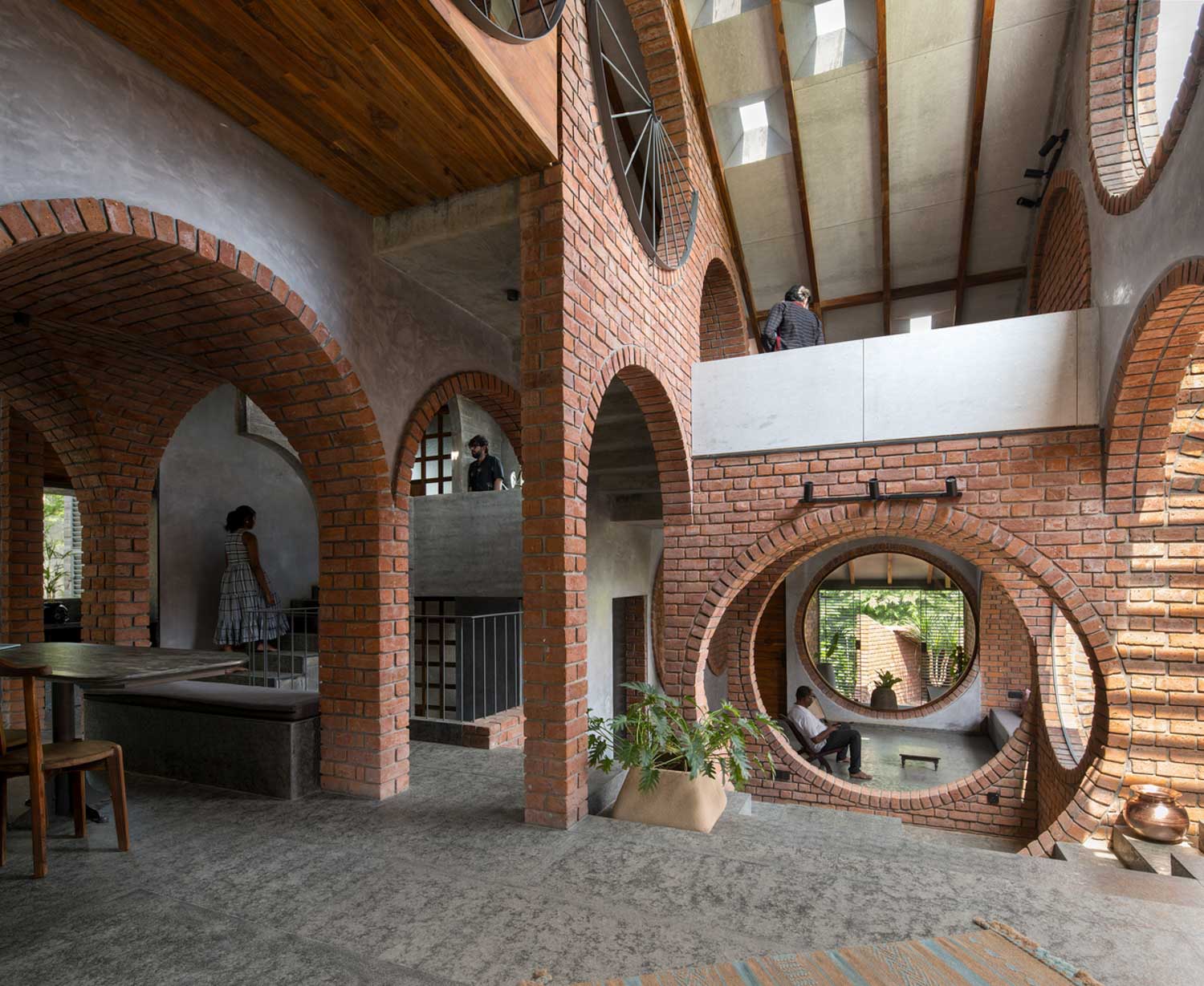
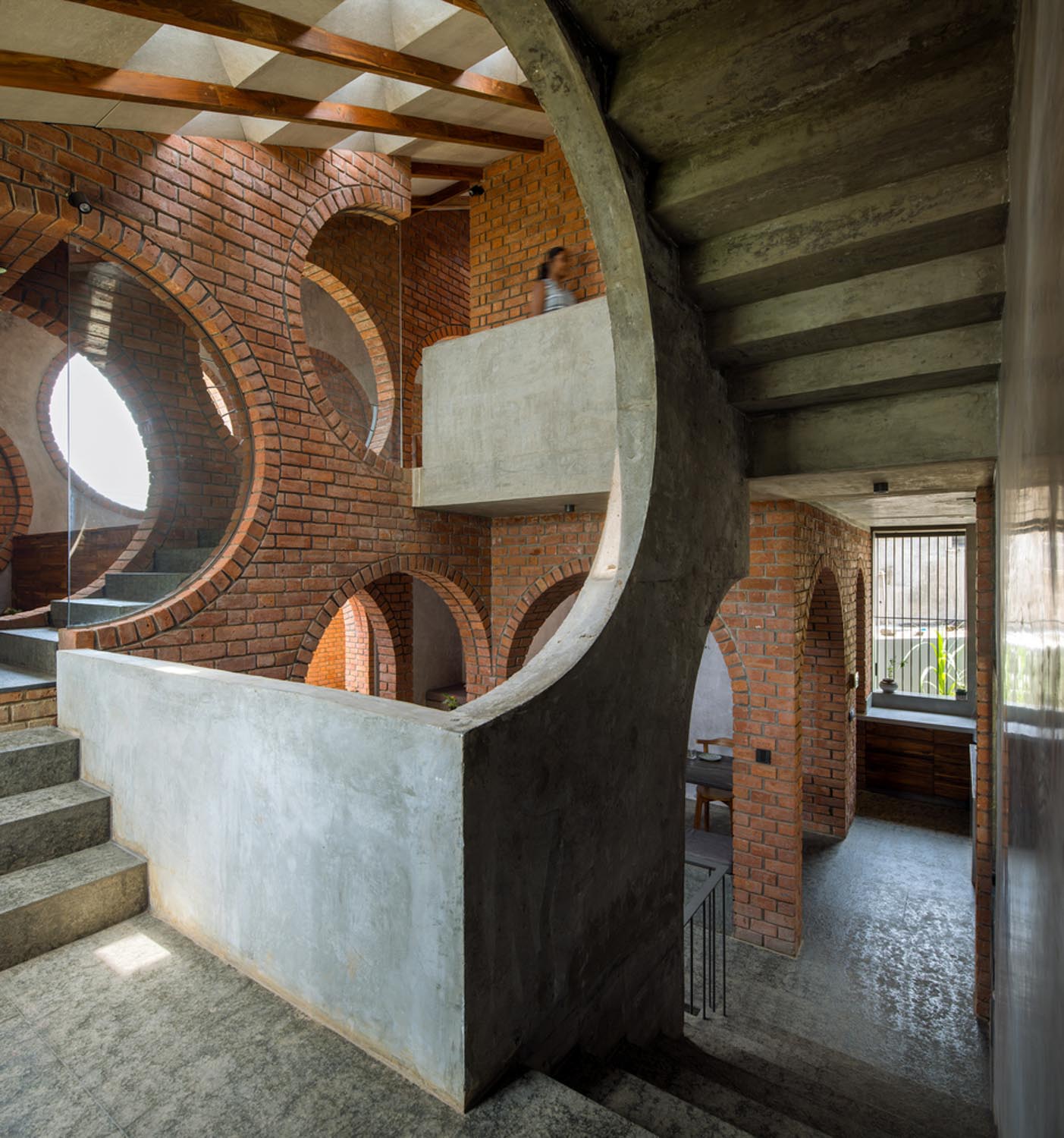
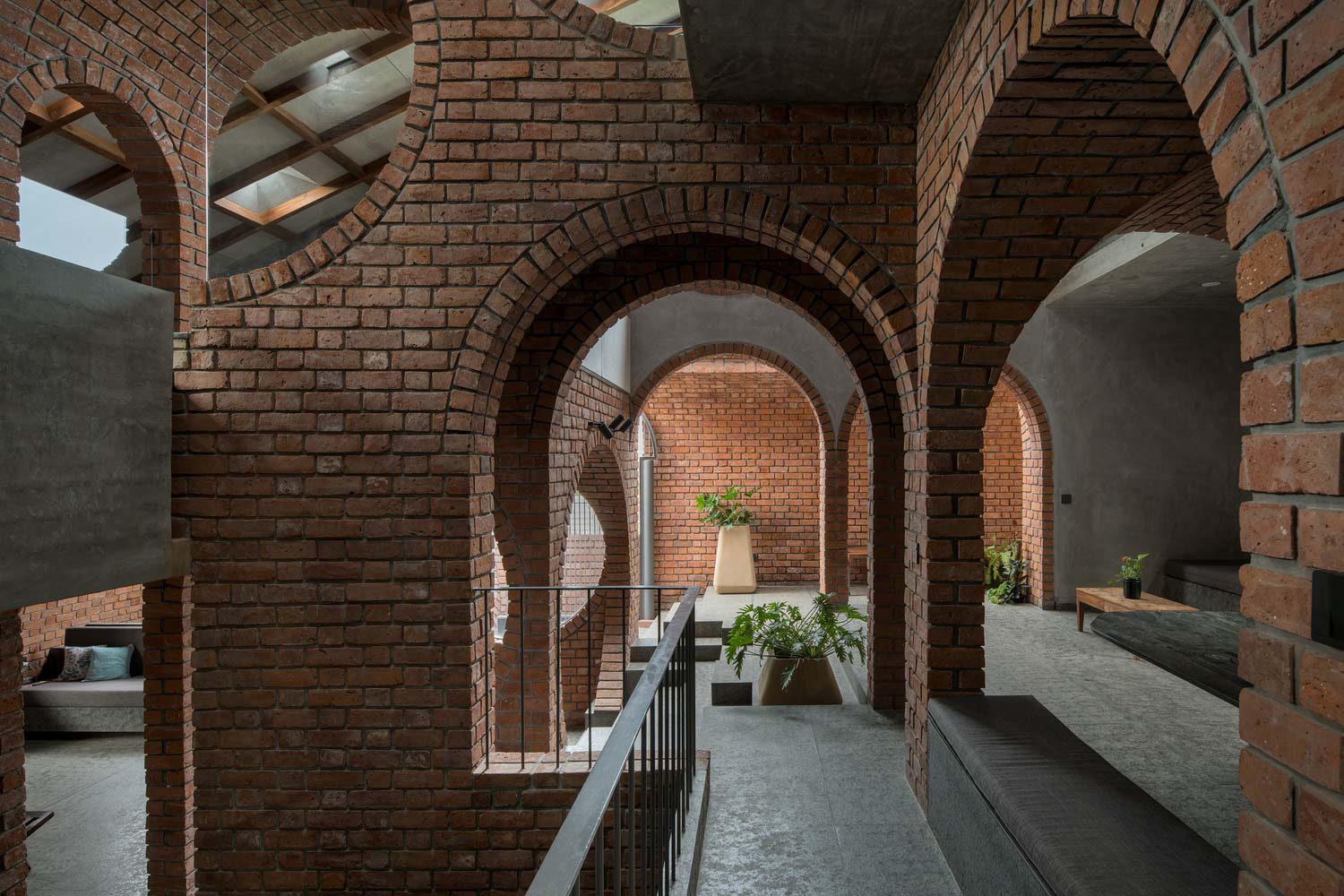
Positioned in front of the L shaped structure, the concrete block generates an open to sky interstitial zone between the two forms. At the heart of this space lies a central courtyard that acts as both a visual and physical connector. A sculptural staircase rises through the courtyard, linking different levels while drawing daylight deep into the home. Portions of the southern and western edges remain open to the sky, creating a dynamic outdoor room that constantly engages with light, wind, and changing weather conditions.

Climate responsiveness plays a central role in the design. The southern court acts as a wind catcher, channeling cool breezes into the courtyard where a water body tempers the air before it disperses throughout the house. Warm air naturally rises and escapes through strategically positioned upper openings, skylights, and ventilating apertures. Together, these passive design strategies create a naturally lit and well ventilated environment that remains comfortable throughout the year.

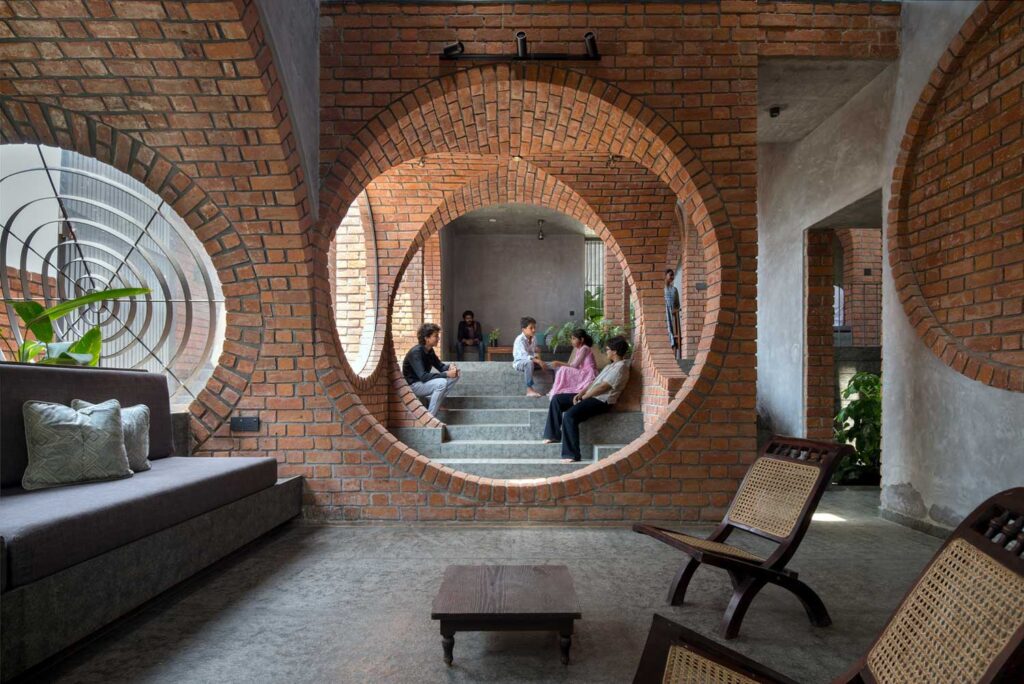
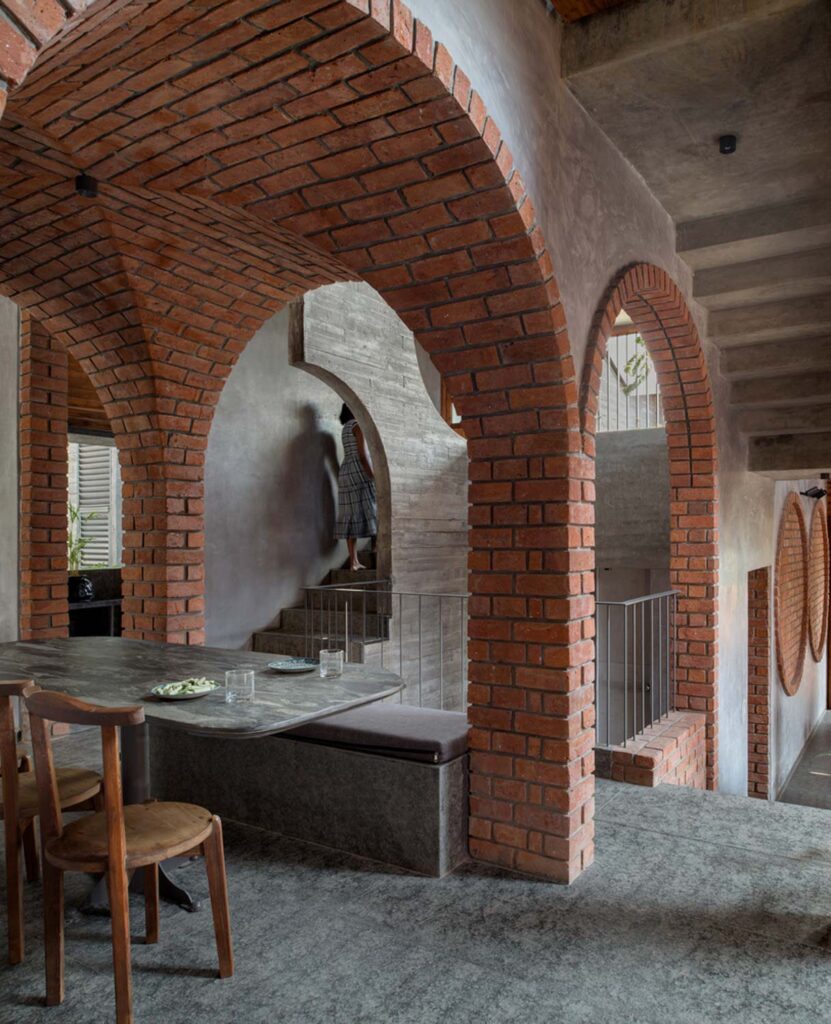
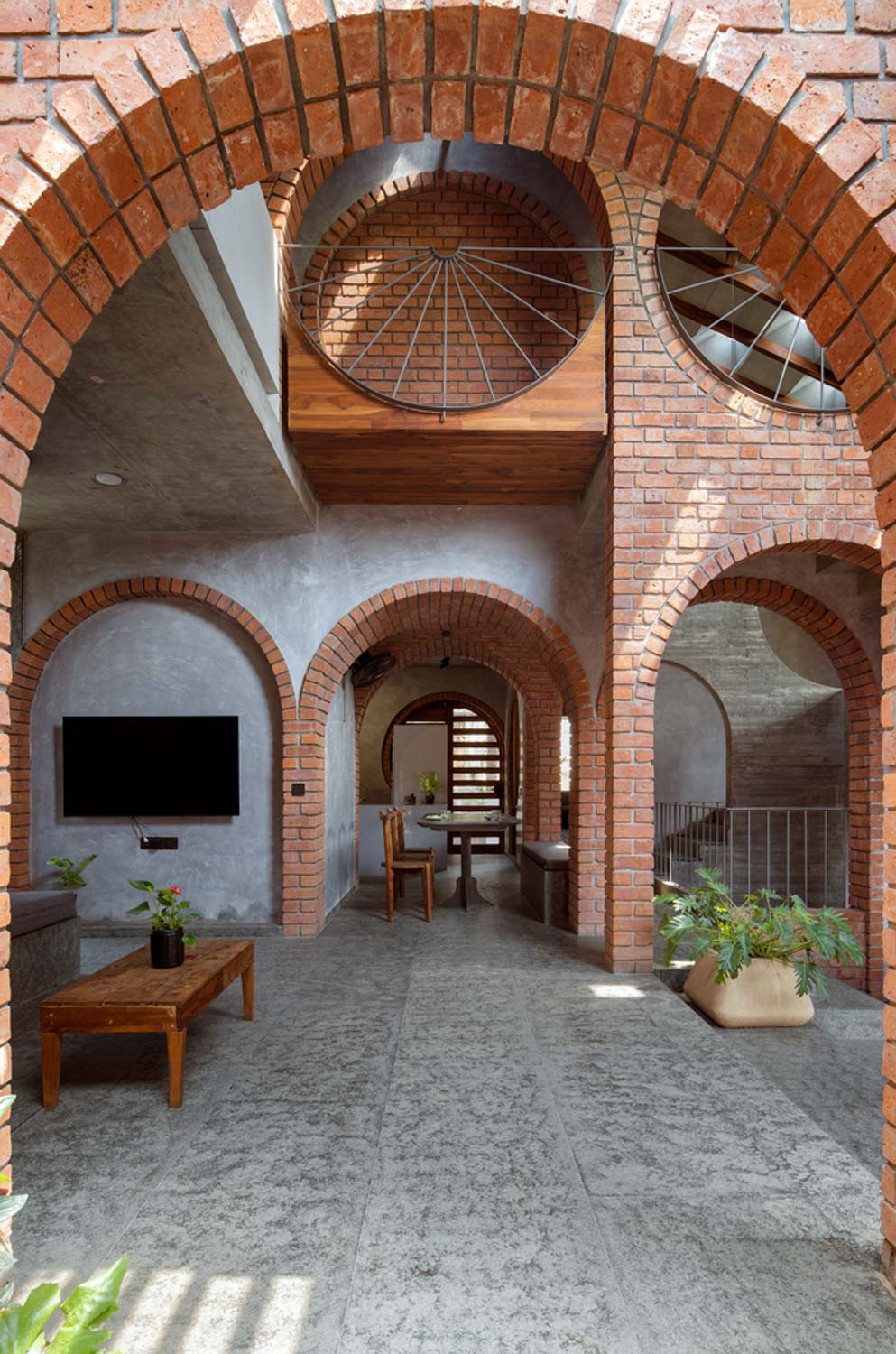
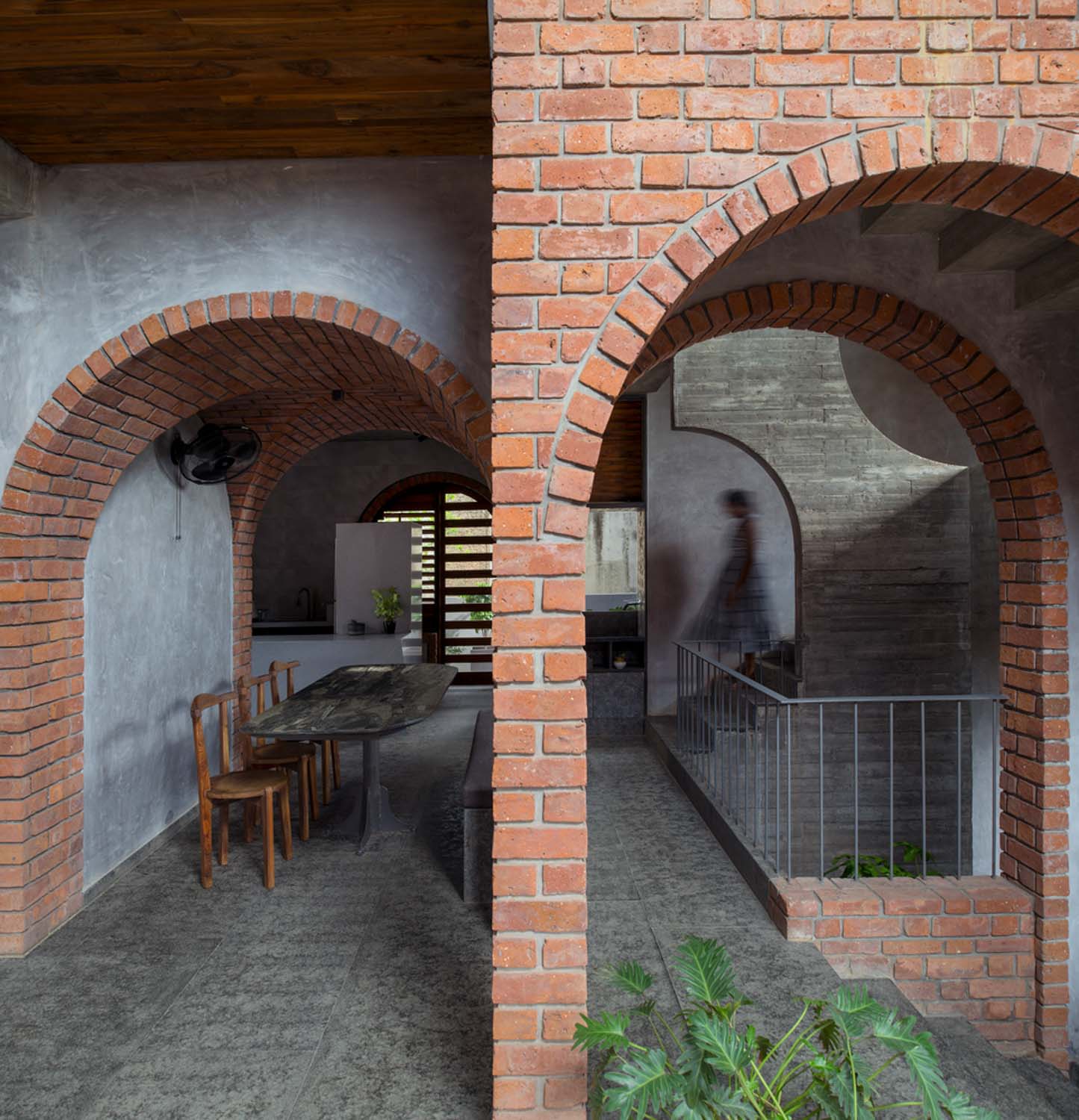
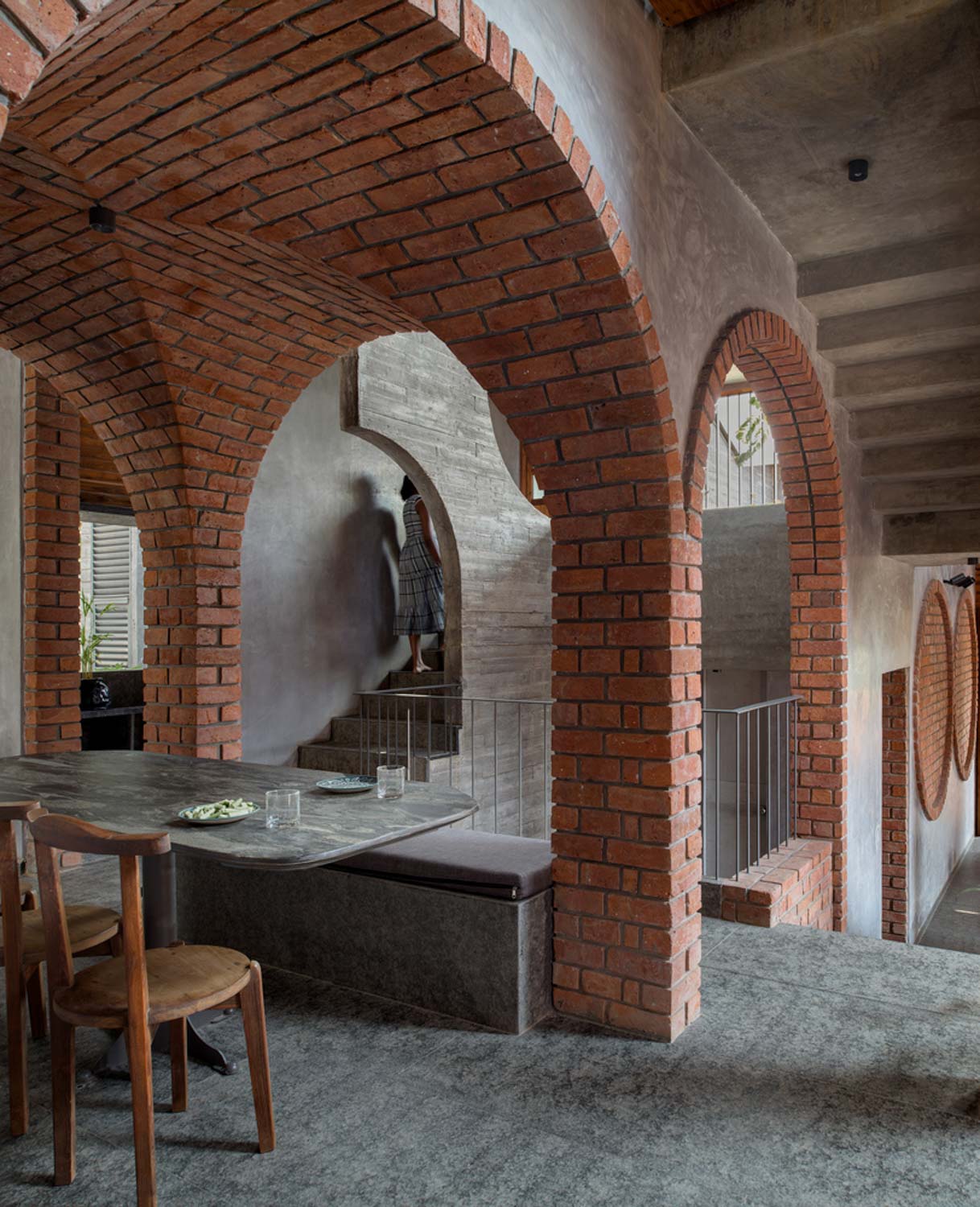
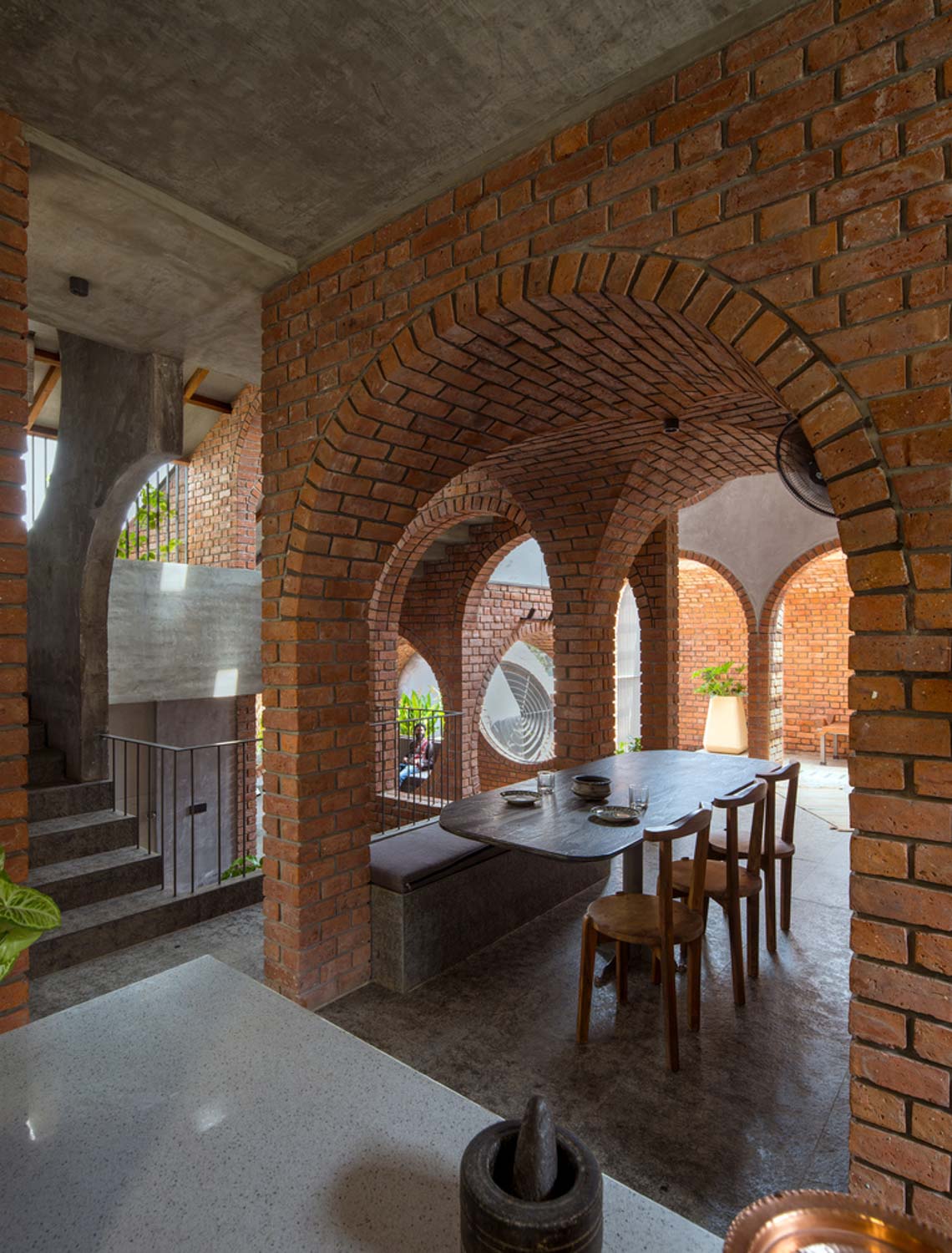
Internally, the house unfolds as a series of interconnected spaces arranged across staggered levels. The living room, kitchen, dining area, family lounge, and study maintain visual continuity while offering subtle distinctions in scale and experience. Oriented toward the central courtyard and staircase, these spaces foster a constant sense of connection, encouraging interaction while preserving individual moments of retreat.

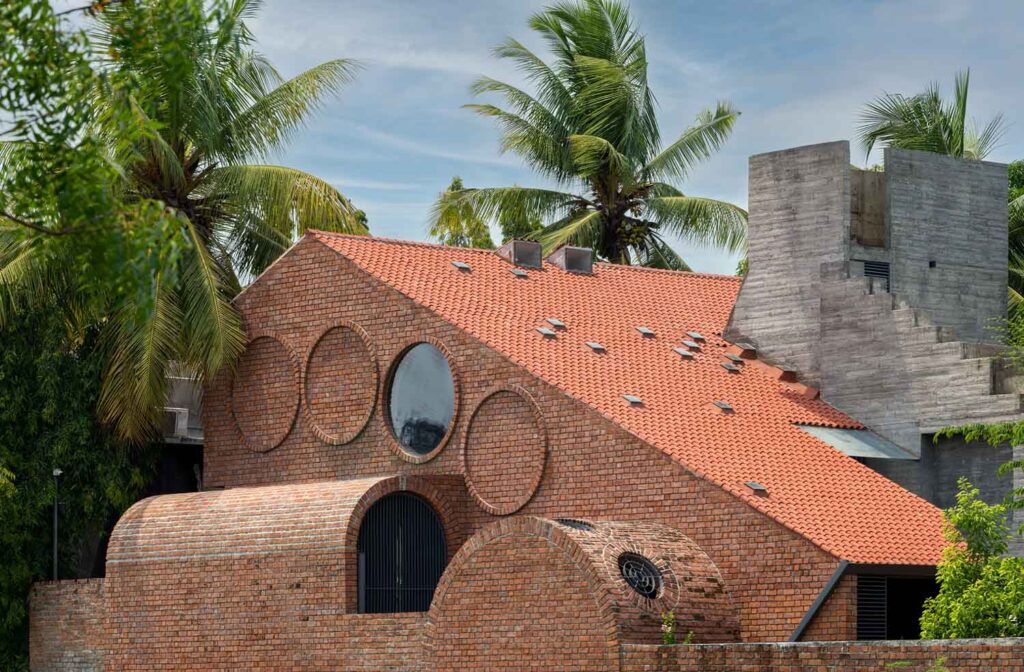
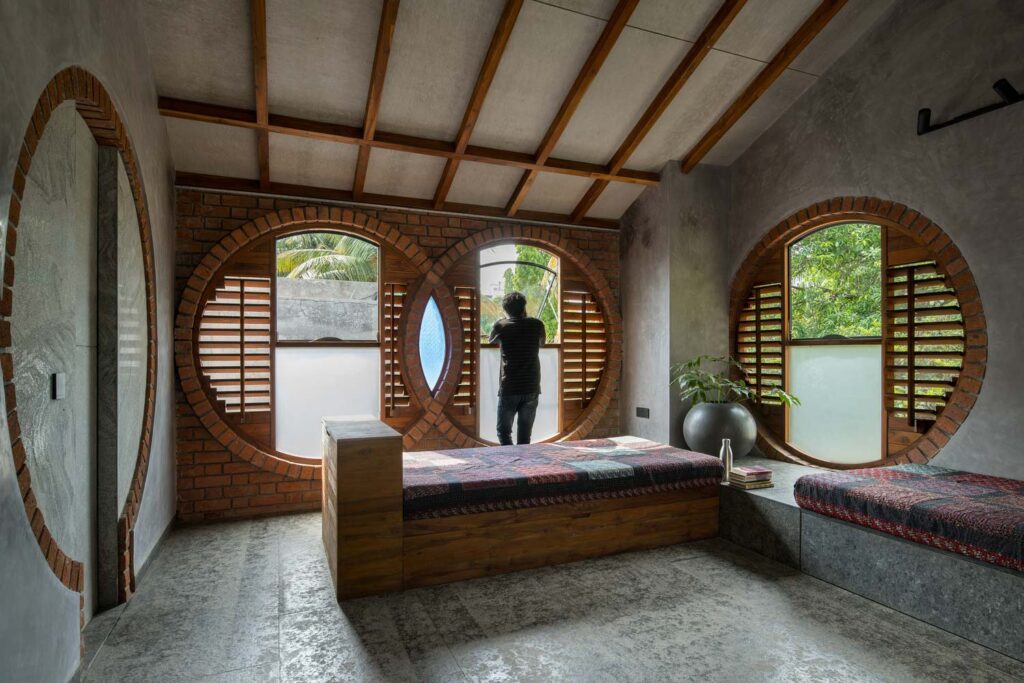
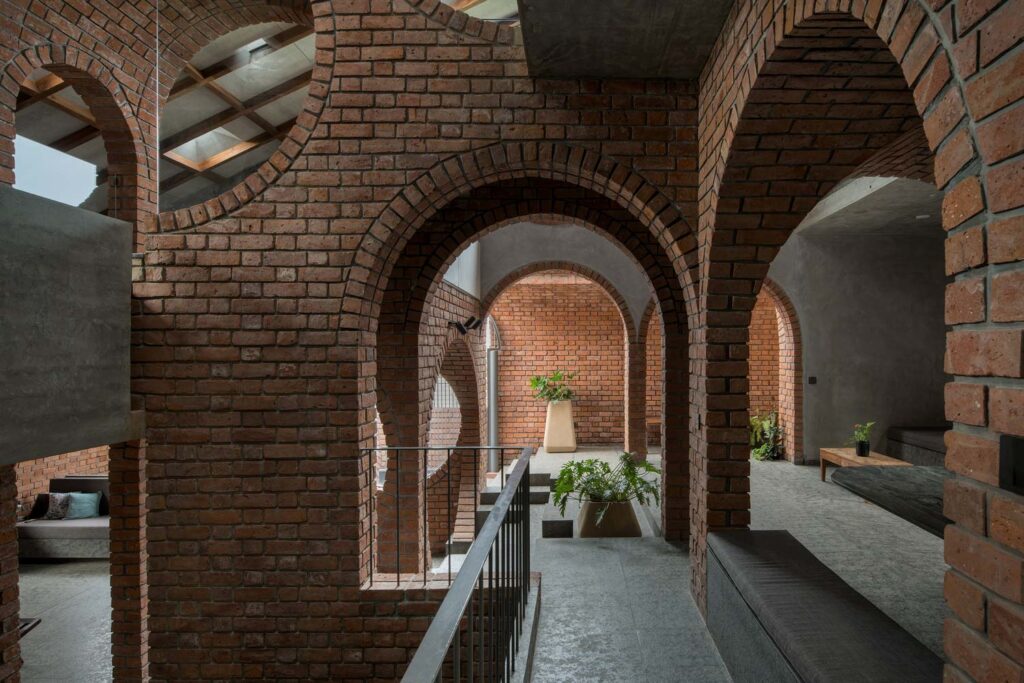
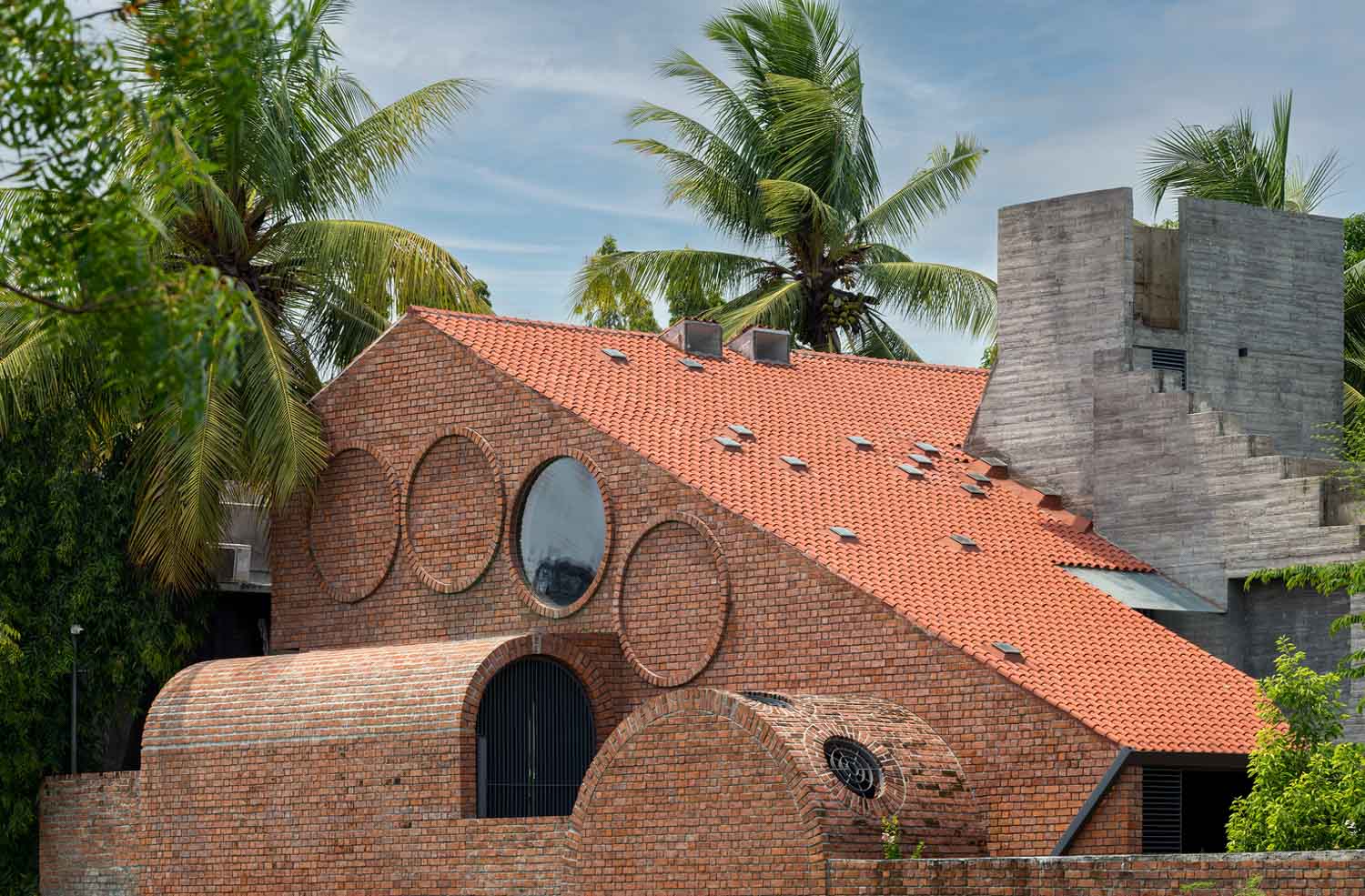
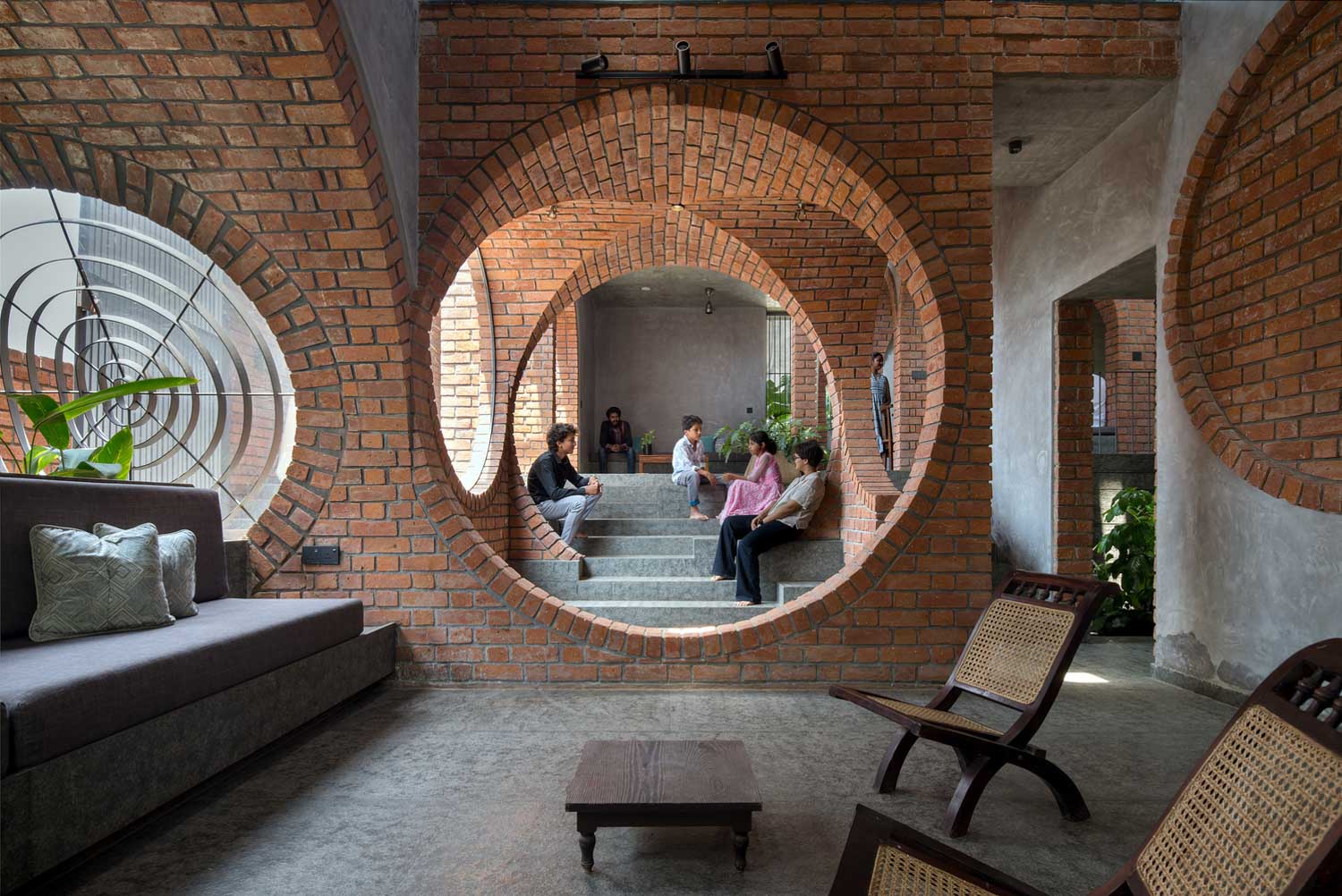
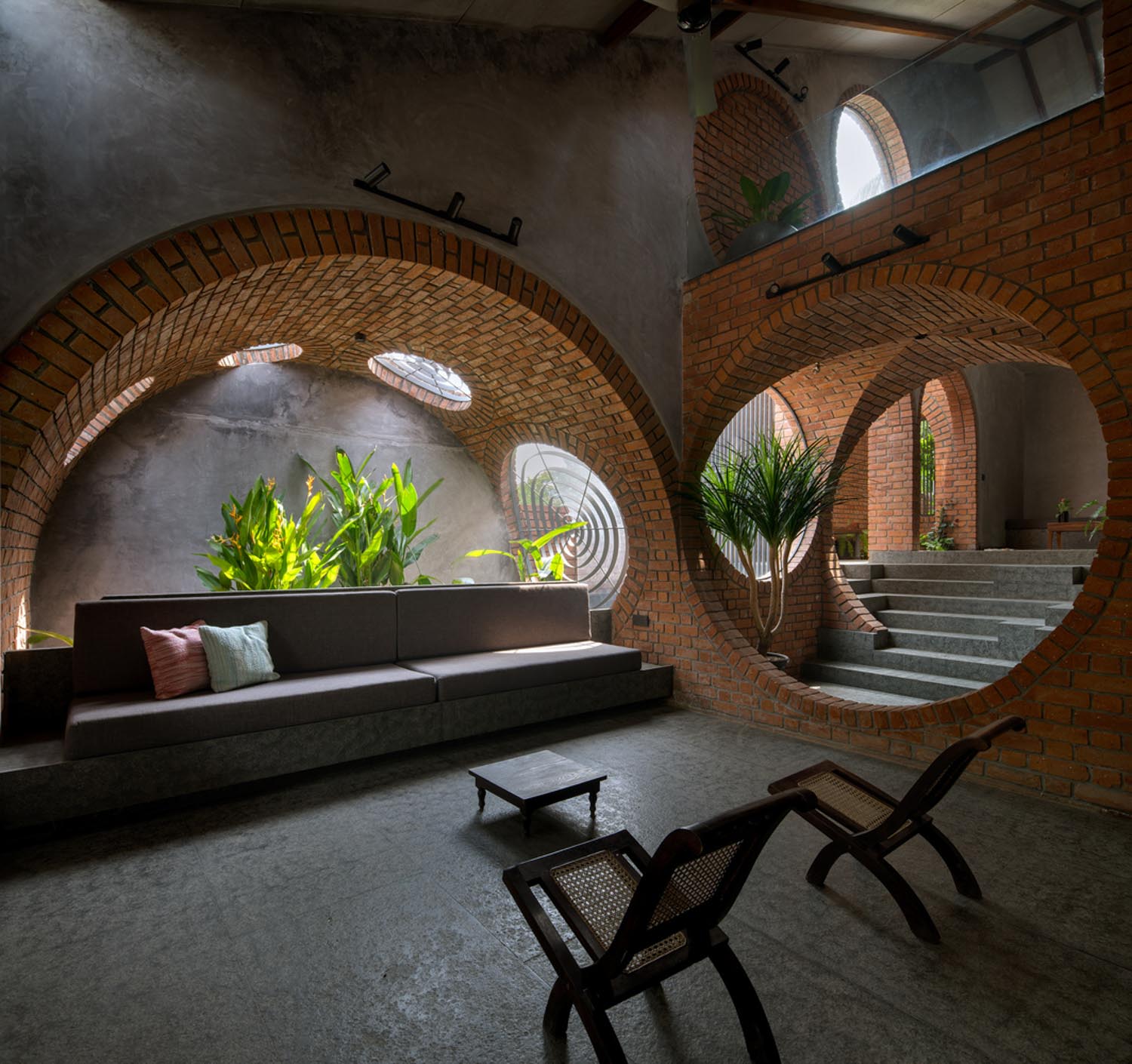
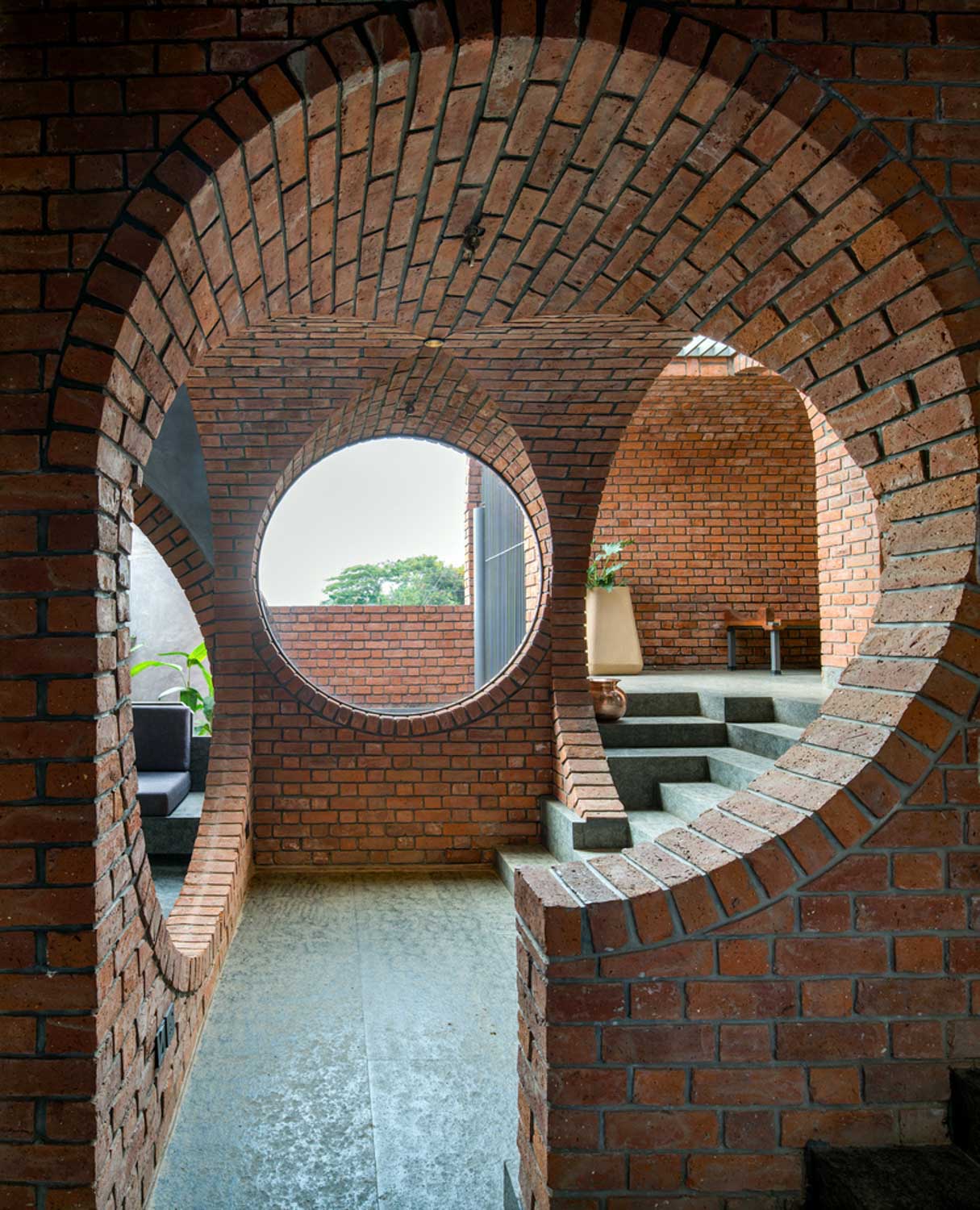
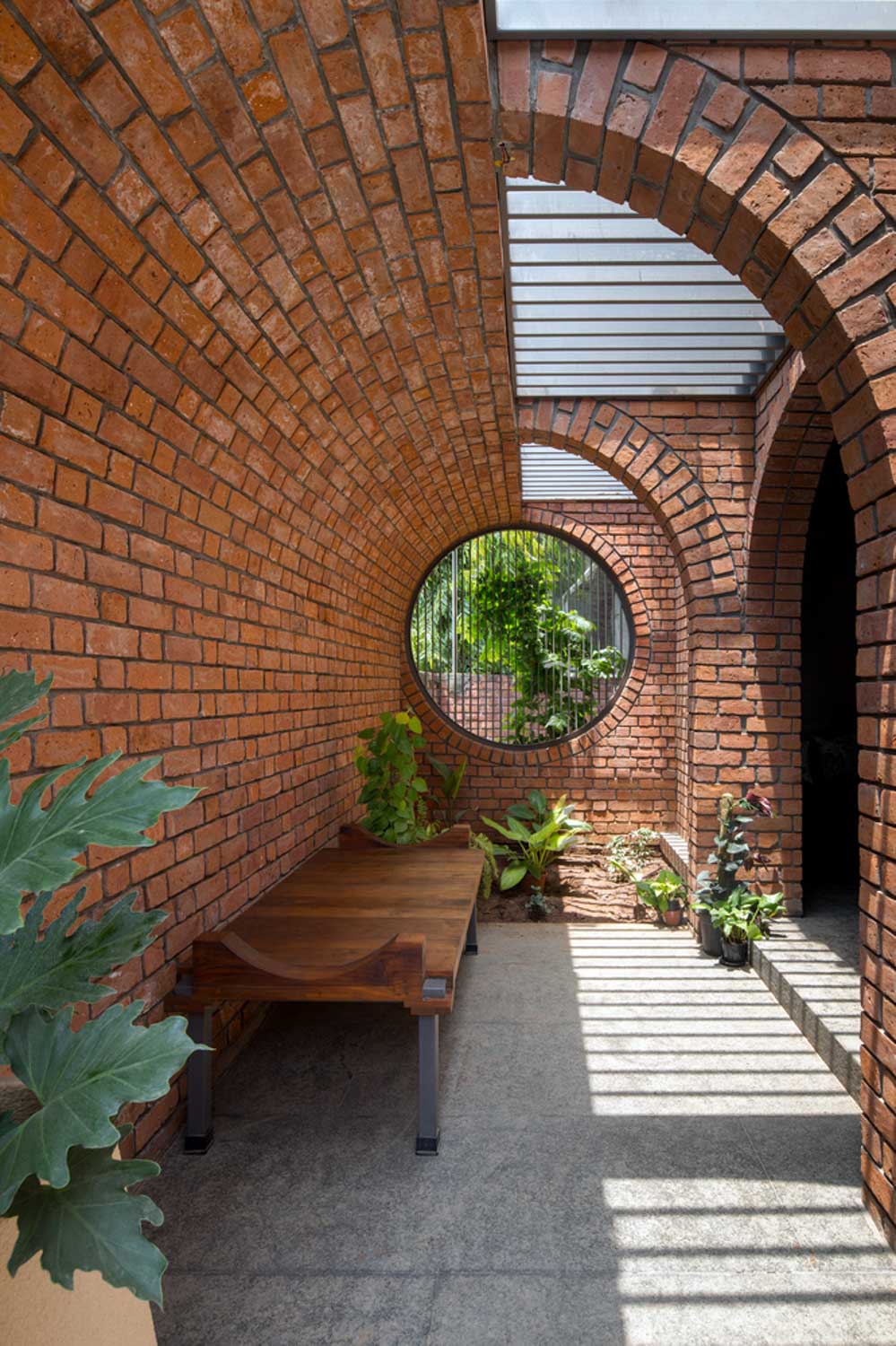
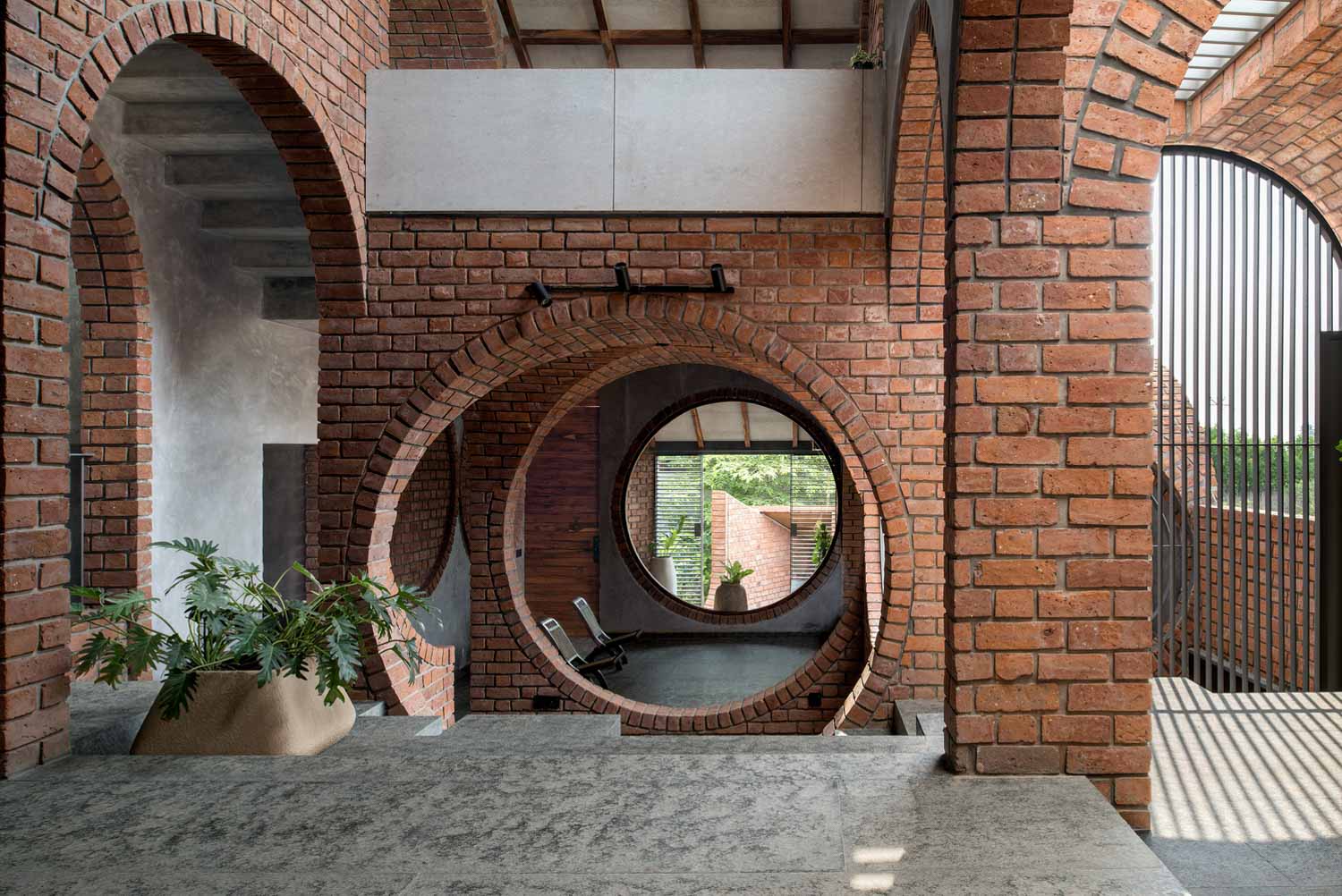
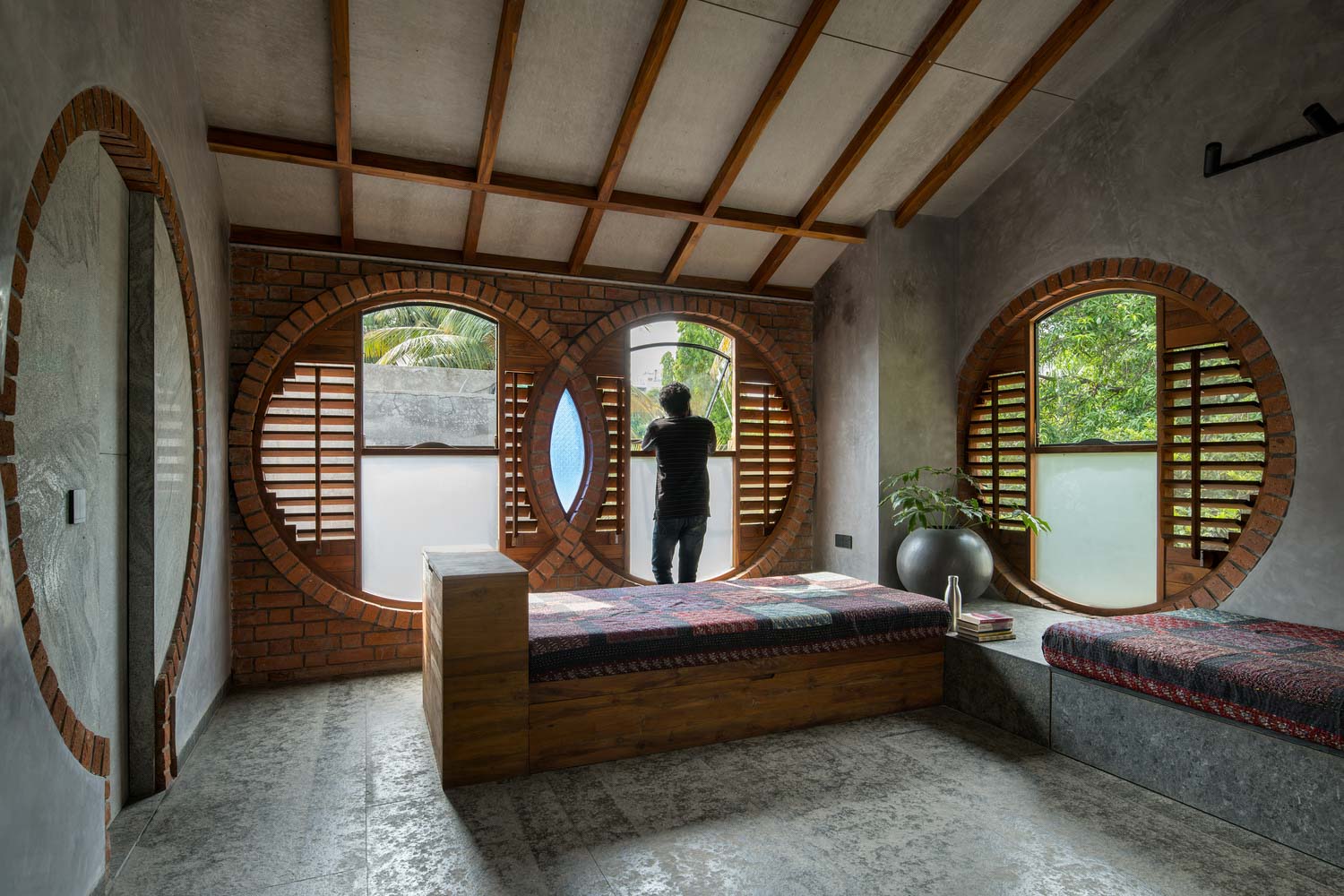
A defining quality of Rangmanch House is the contrast between its two architectural identities. The L shaped block embraces softness and warmth through a language of arches, circular openings, vaults, and niches. These elements introduce rhythm, texture, and a sense of intimacy, creating spaces that feel welcoming and deeply rooted in tradition.

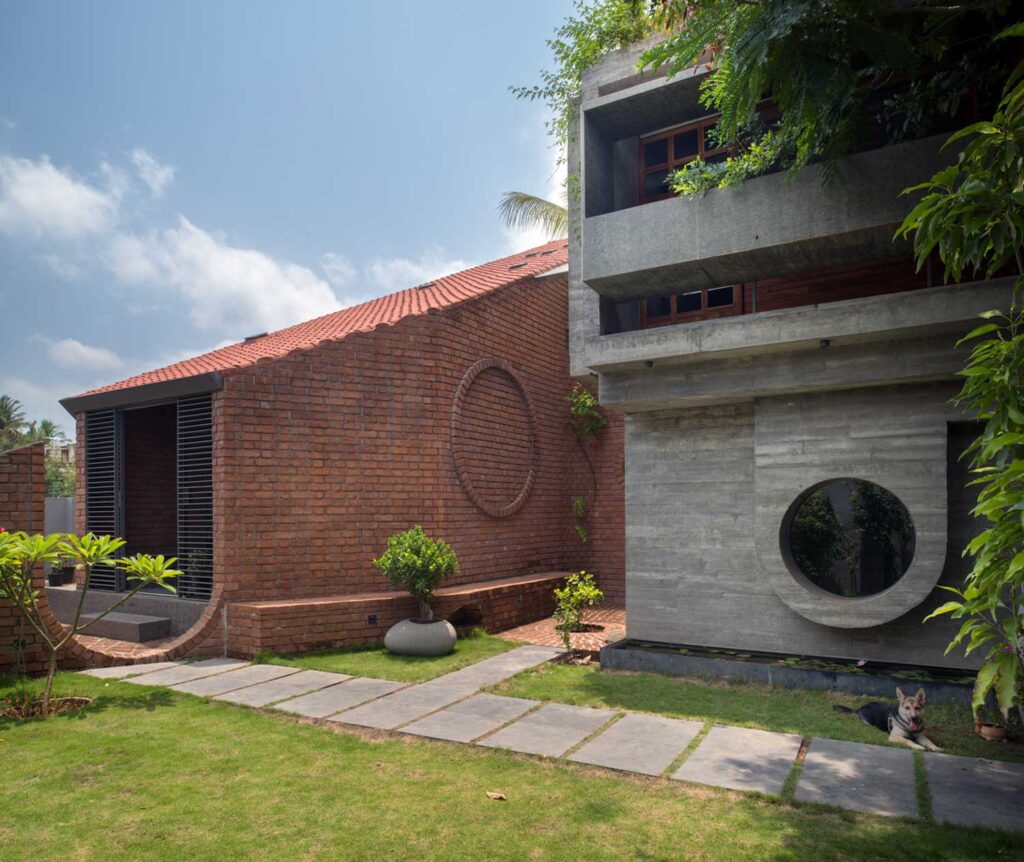
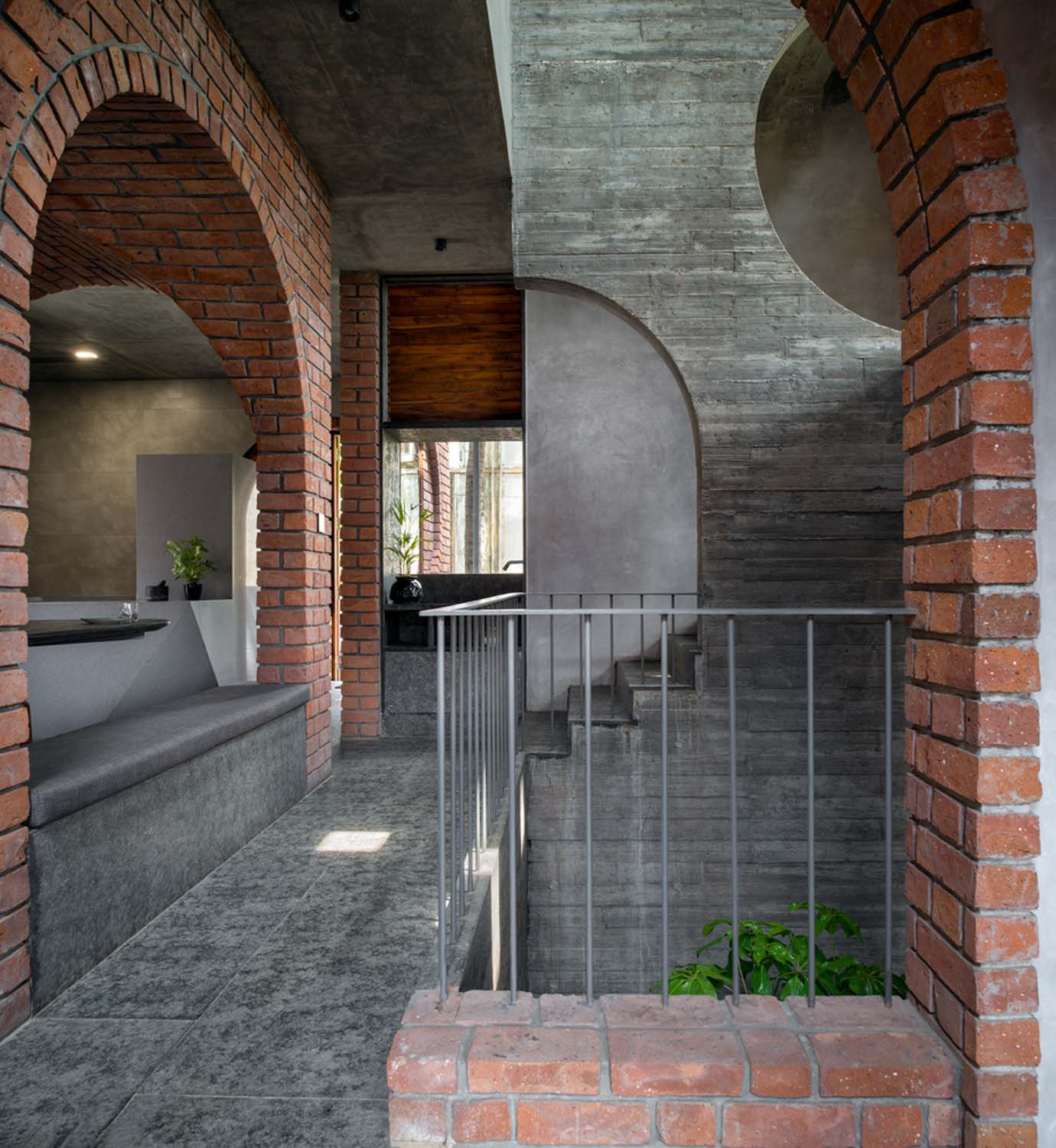
As one moves toward the concrete cuboid, the architectural vocabulary gradually shifts. Curves give way to straight lines, arches transform into precise openings, and the geometry becomes more restrained. The material palette reinforces this transition. Exposed brick lends warmth, tactility, and craftsmanship, while concrete introduces solidity, stillness, and order. Despite their differences, the two volumes remain inseparable, connected through carefully choreographed movement, natural light, and visual relationships.

Beyond its functional requirements, the house offers a thoughtful reflection on Solapur’s architectural evolution. Historically, the city was defined by traditional Wadas, inward looking, climate responsive homes built using local materials and artisanal techniques. Over time, colonial and post colonial influences introduced more formal geometries, industrial materials, and new construction methods.

Rangmanch House draws inspiration from both eras. The brick clad L shaped block pays homage to vernacular architecture through its exposed masonry, sloping roof, and handcrafted detailing. Built using locally sourced materials and executed by regional artisans, it reinterprets traditional values through a contemporary lens.

The adjoining concrete volume references the architectural language that emerged during later periods. Its exposed concrete walls, subtle layering, and carefully articulated surfaces reinterpret the solidity of stone construction in a modern form. This restrained expression culminates in a planted terrace that offers a quiet moment of pause within the composition.

Together, these two volumes create a compelling architectural duet. One is expressive, open, and celebratory. The other is introspective, calm, and grounded. Like a finely tuned jugalbandi, each complements the other while retaining its individuality. The result is a home that embraces contrast rather than avoiding it, weaving together heritage, climate, music, and contemporary life into a rich and memorable architectural experience.

In Rangmanch House, architecture becomes more than shelter. It becomes performance, conversation, and continuity, a living composition where every space contributes its own note to a larger harmony.

Project Name : Rangmanch House
Project Location : Solapur, India
Architect/Interior Designer : PMA madhushala
Design Team : Rohan Panvel, Divya Jyoti, Prasanna Morey

Photographer: Hemant Patil

Design Essentia Magazine

specially curated by the editorial team at Design Essentia Magazine.

Previous Story

Bona Casa / Asummi R Design

Latest from ARCHITECTURE