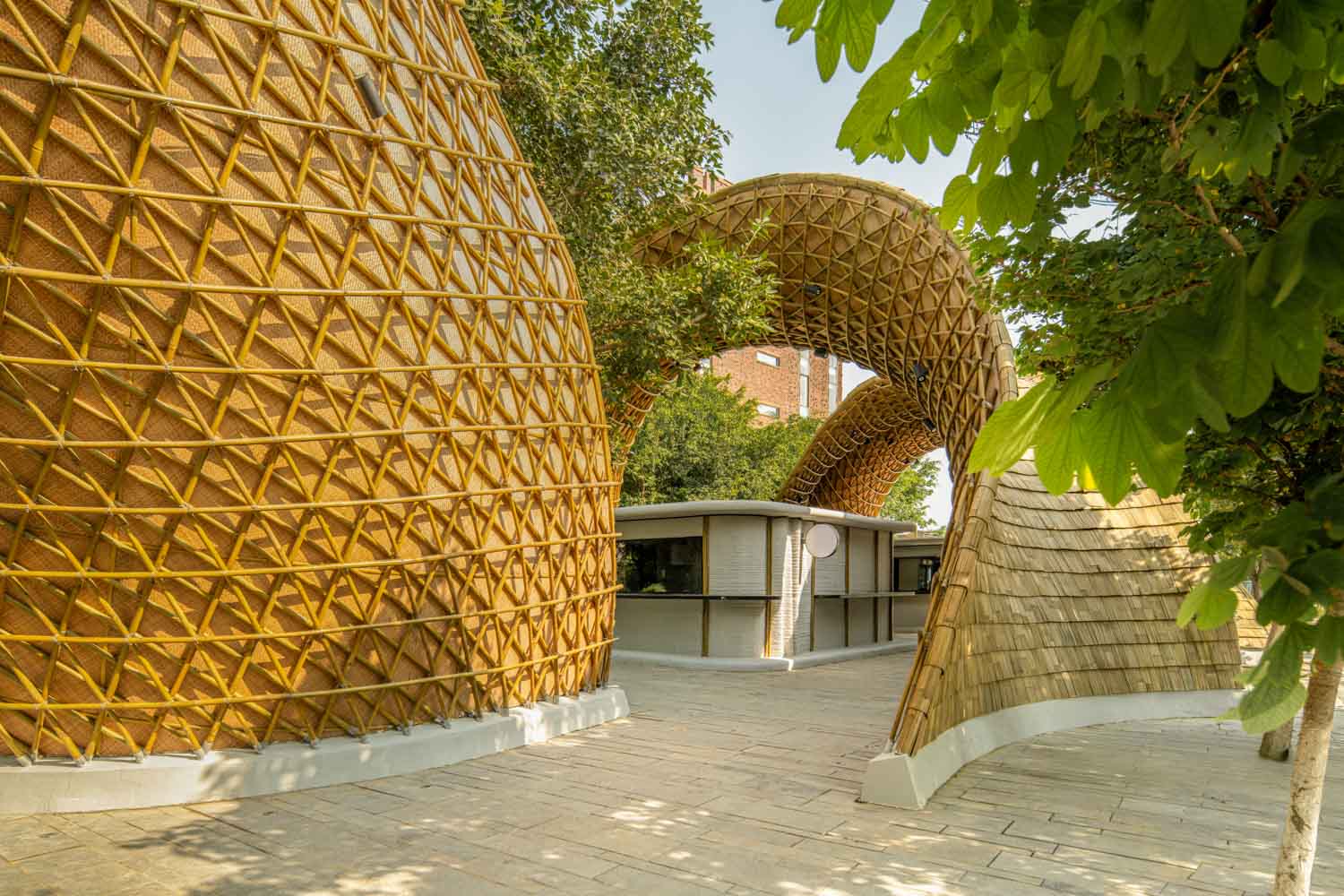






A cocoon of bamboo and concrete rethinking a sustainable food street vision.
Project Name : The Hungry Caterpiller
Project Location : Sonipat, India
Architect/Interior Designer : Lyth Design
Principal Architect/Designer : Apoorva Shroff
Photographer: Avesh Gaur and Sohaib Ilyas
What if a food street could be more than a row of kiosks and hurried transactions. What if it could become a place of imagination, comfort, and environmental awareness. Designed by Architect Apoorva Shroff of Lyth Design, The Hungry Caterpillar redefines the idea of a campus food street as a playful yet responsible architectural intervention.
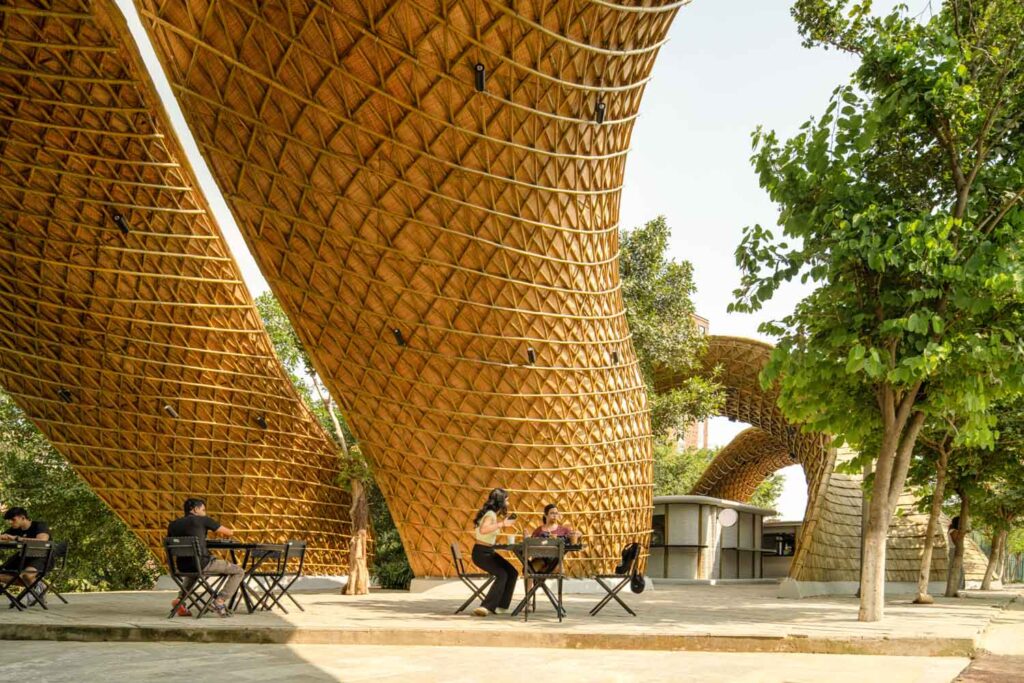
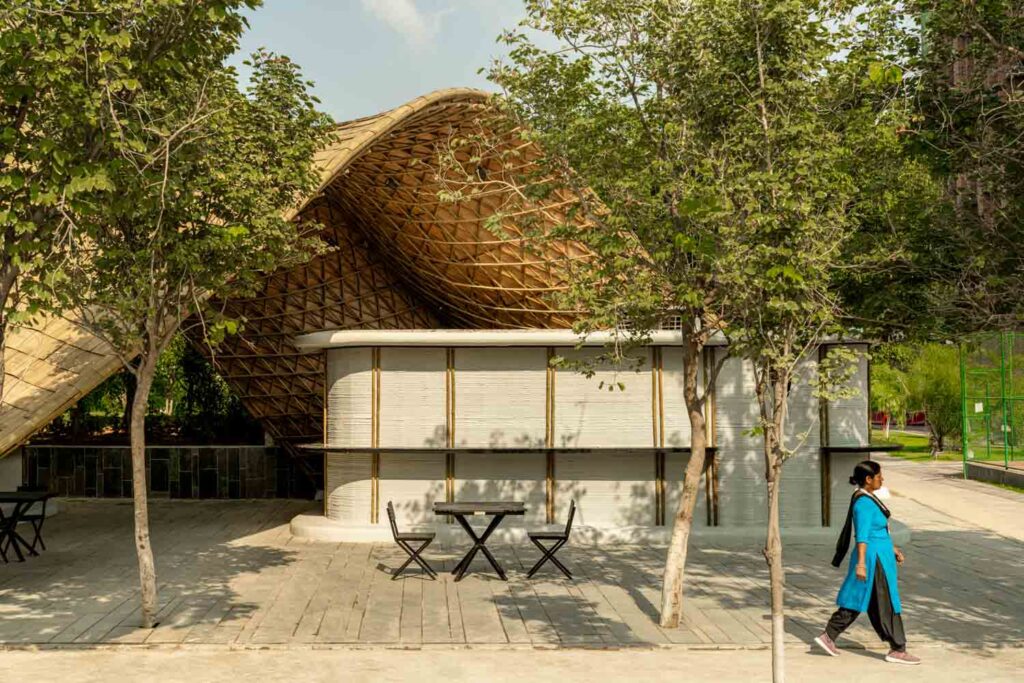
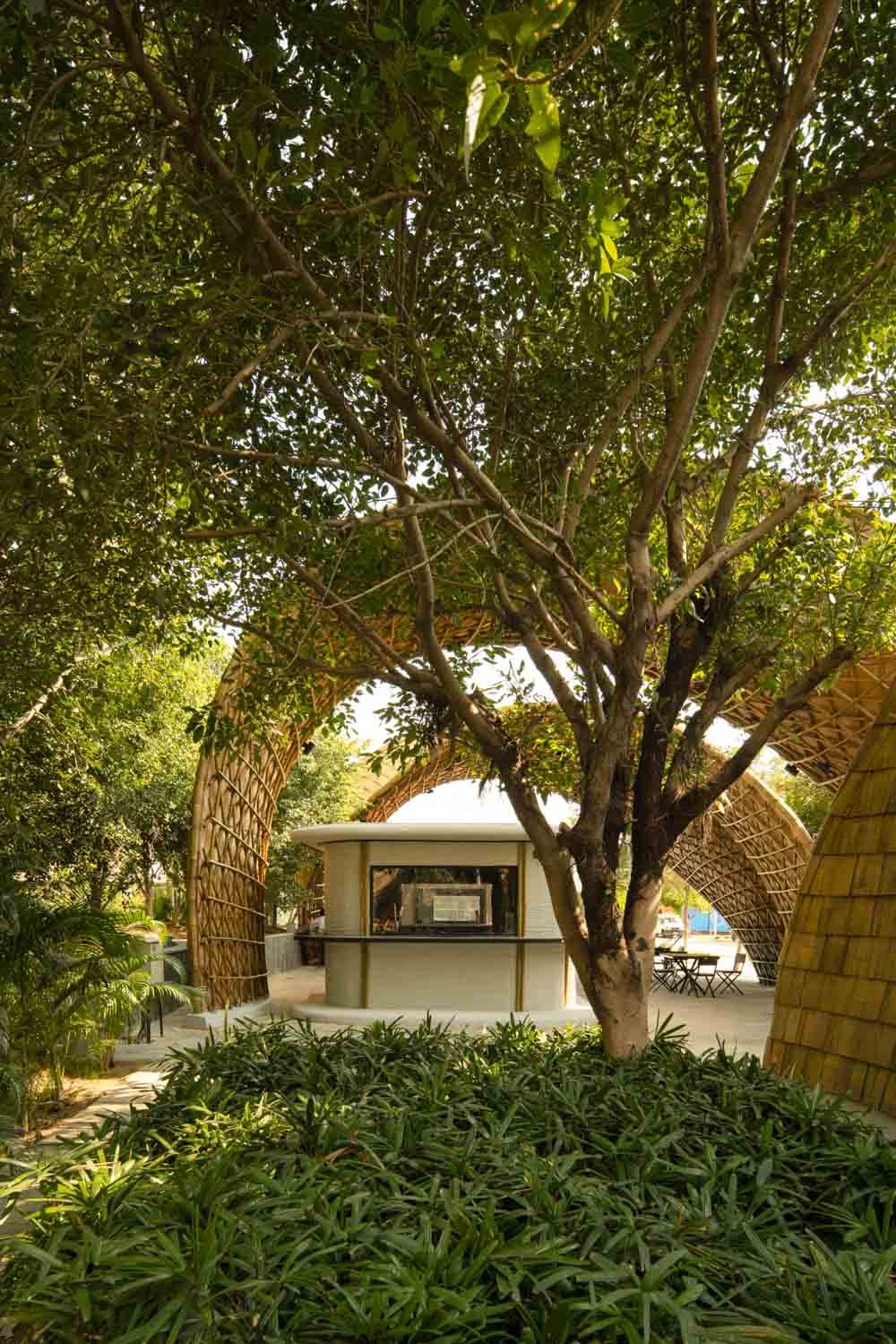
The brief called for a destination with character, one that children would enjoy and remember rather than simply pass through. On her first visit to the site, Apoorva Shroff envisioned a cocoon nestled within a canopy of trees, a gentle caterpillar feeding peacefully, protected and at ease. That early image became the emotional anchor of the project. Yet in a world increasingly shaped by climate urgency and resource consciousness, the vision demanded more than aesthetic delight. It required accountability.
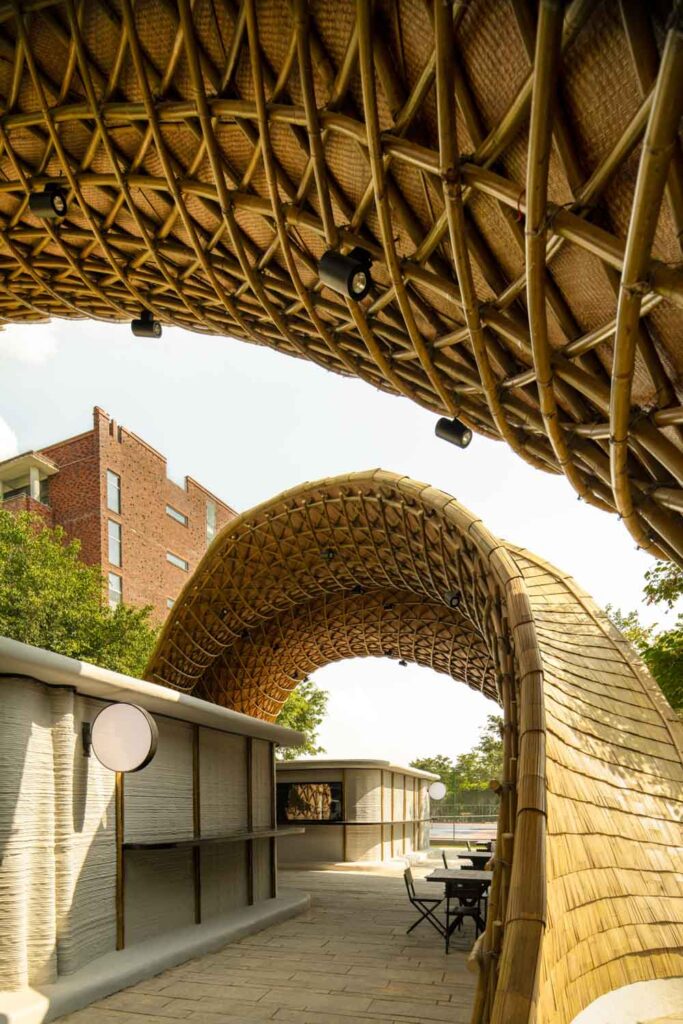
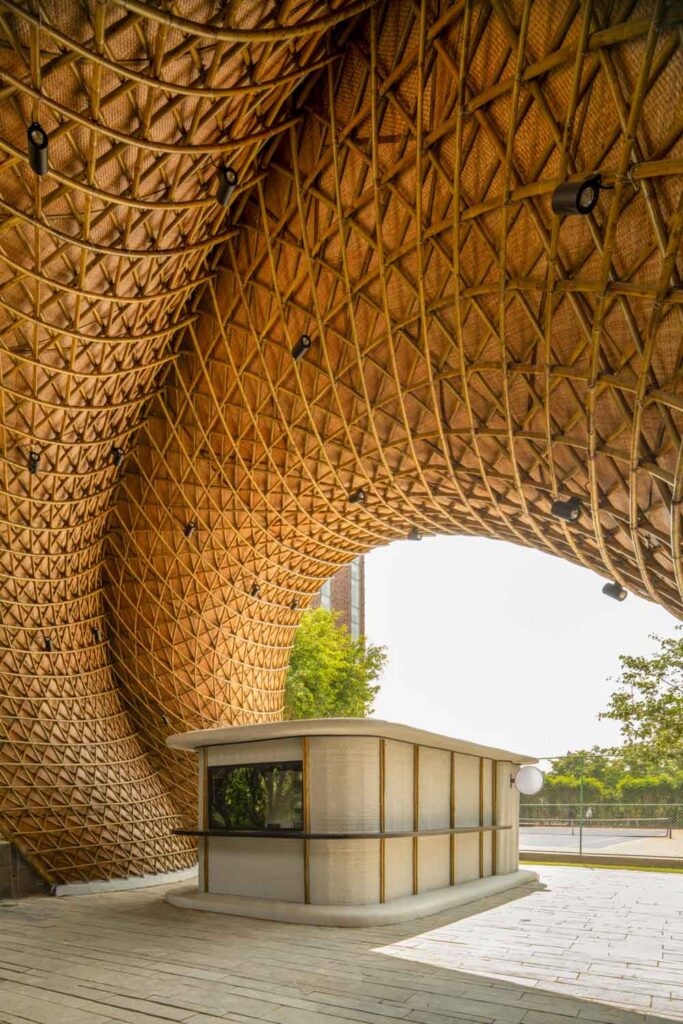
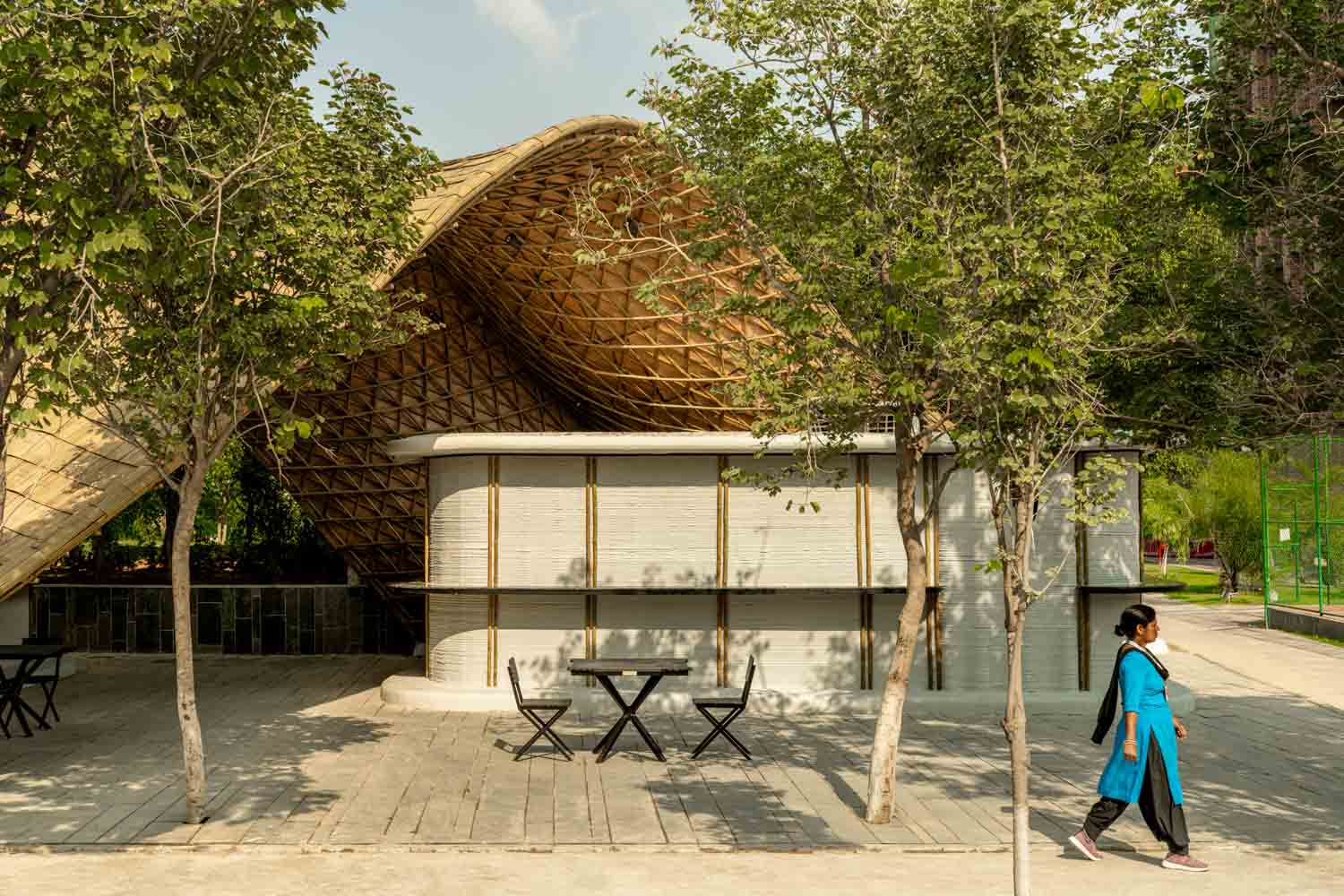
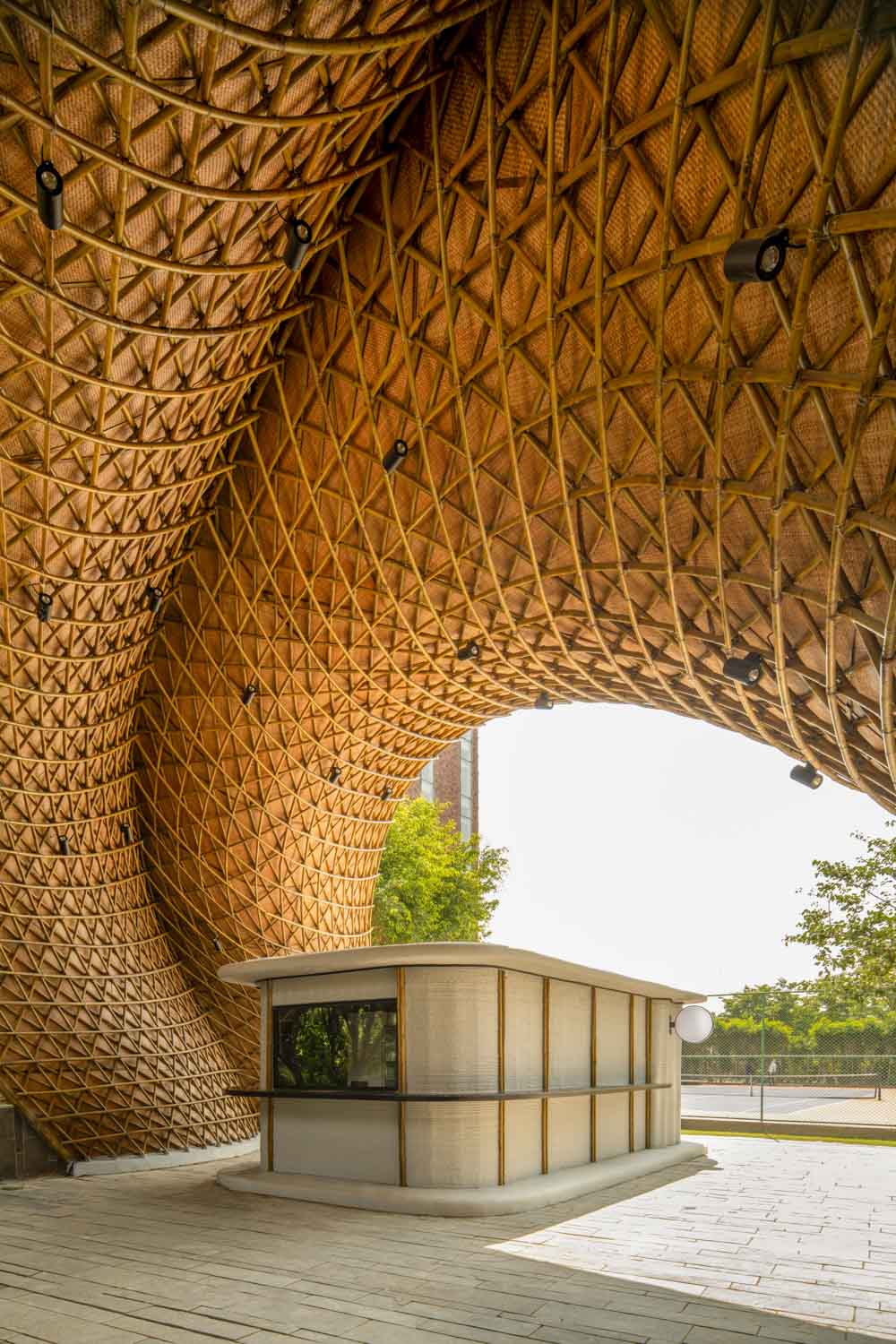
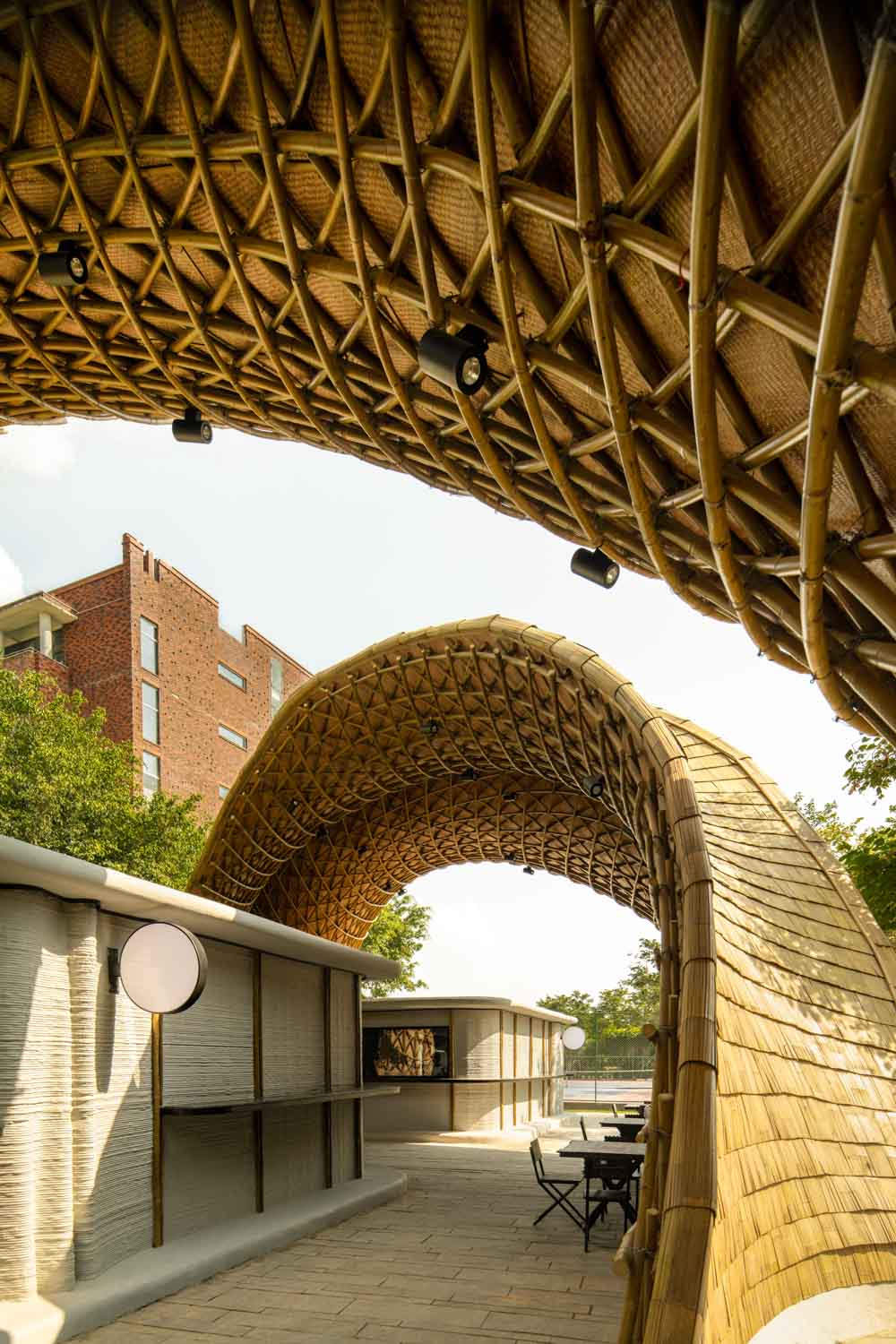
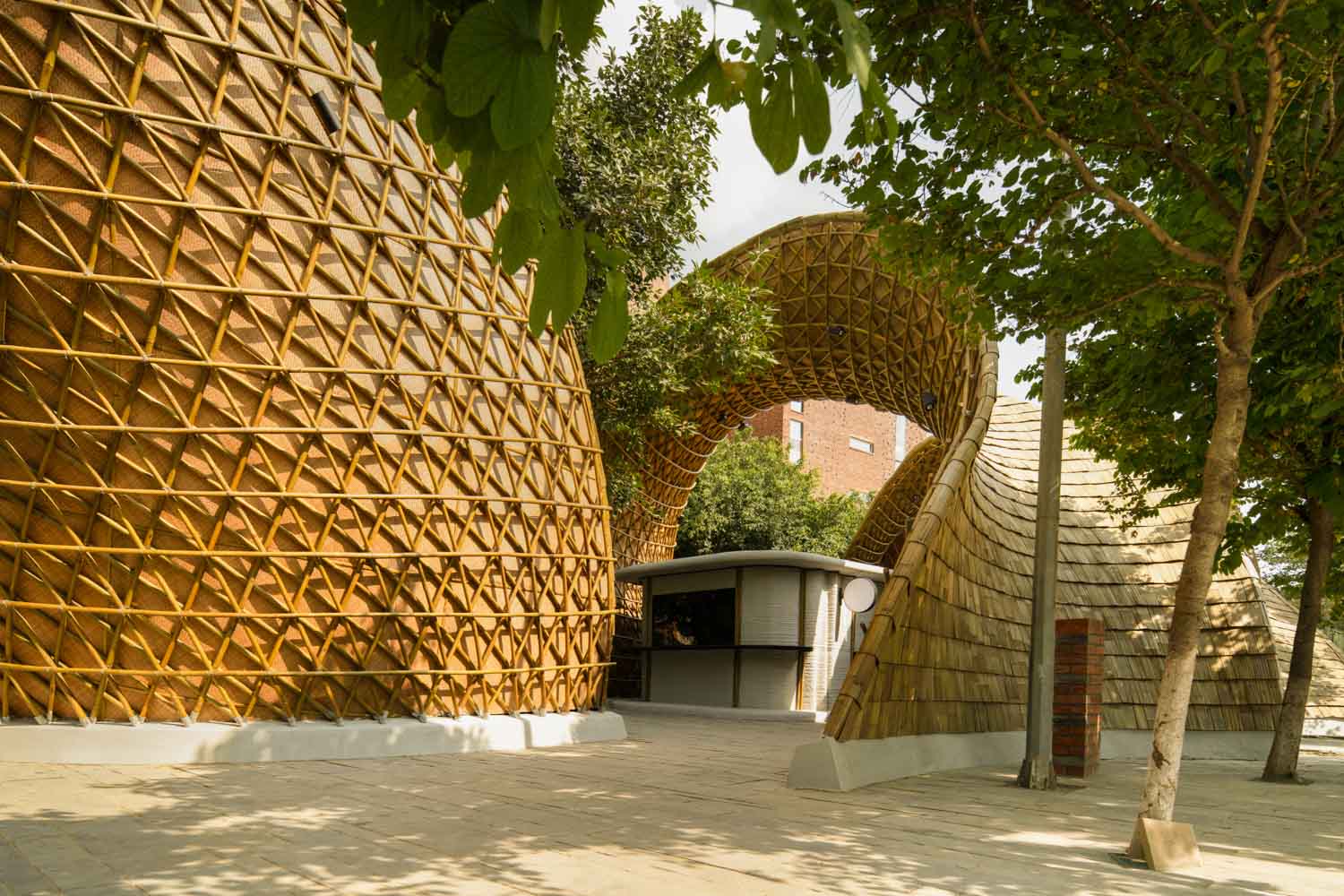
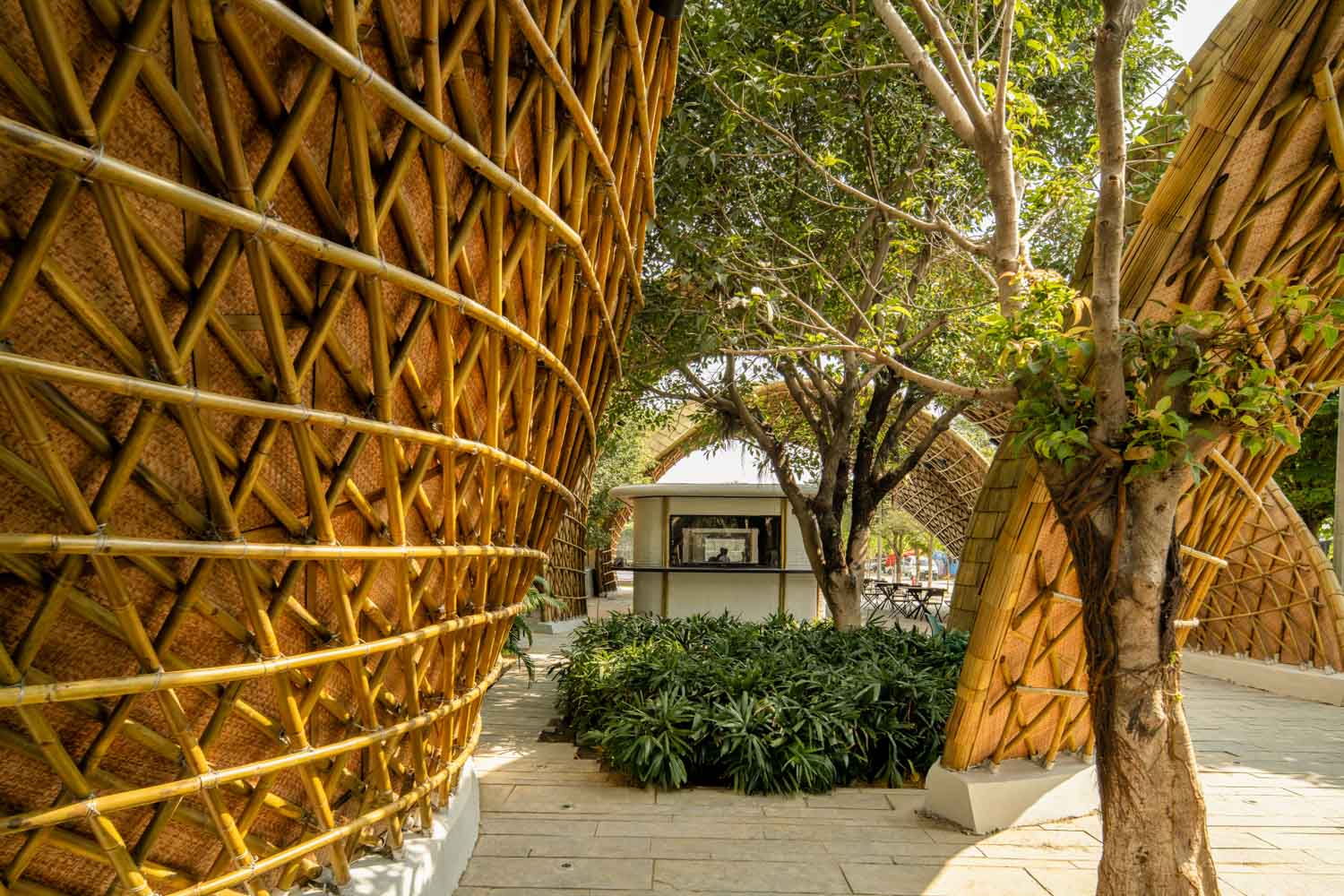
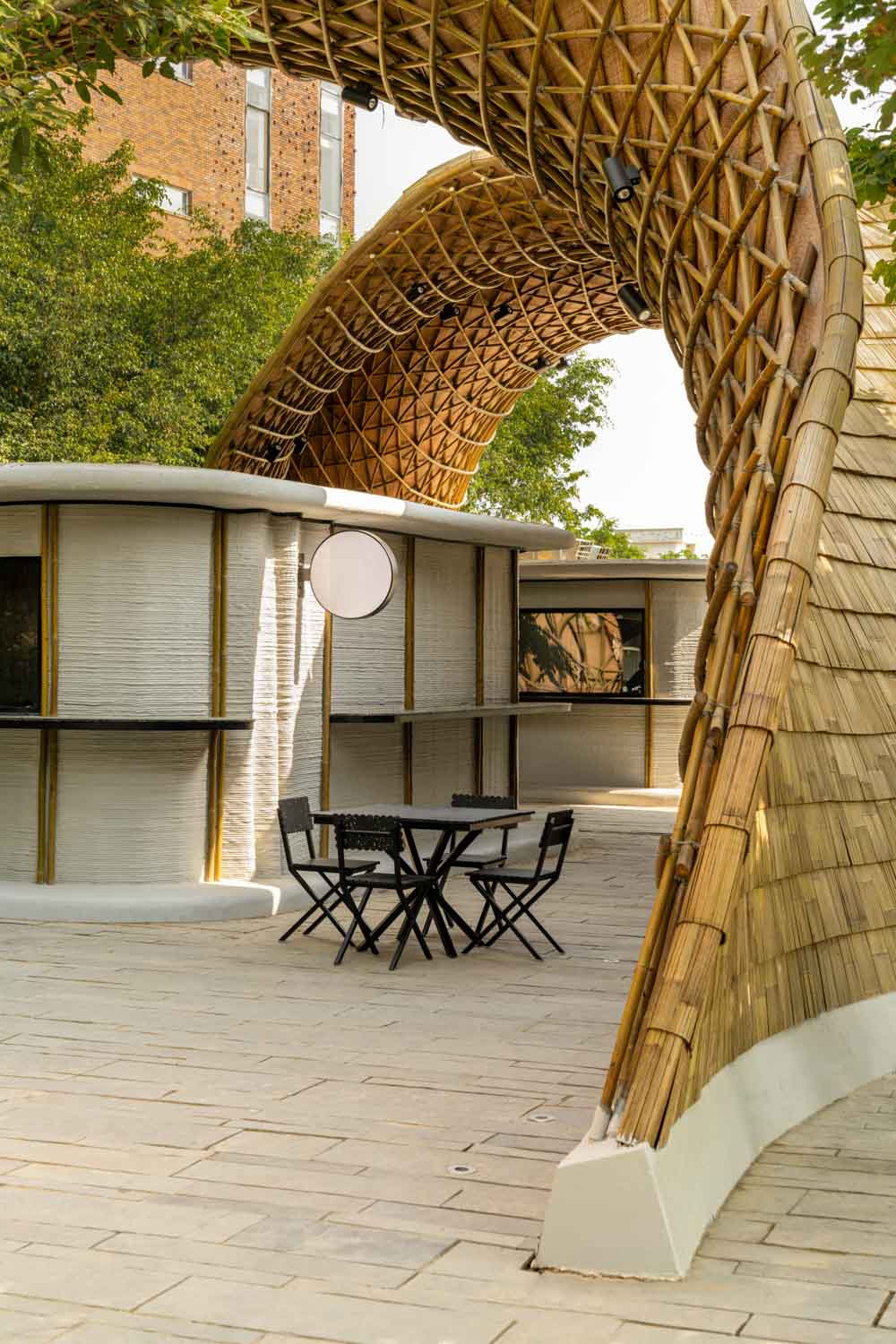
The result is a vibrant food street that merges storytelling with sustainability. The kitchens, inspired by the logic of food trucks, are modular units created through 3D concrete printing. Produced by Micob Pvt. Ltd. in Ahmedabad and assembled on site, these kitchens represent a shift in construction thinking. The additive printing process deposits only the material required, significantly reducing waste compared to conventional building methods. Automation accelerates construction timelines while lowering energy consumption and minimizing the overall environmental footprint. The cavity between the printed concrete walls provides natural thermal insulation, reducing heat gain and improving energy efficiency within the tropical climate.
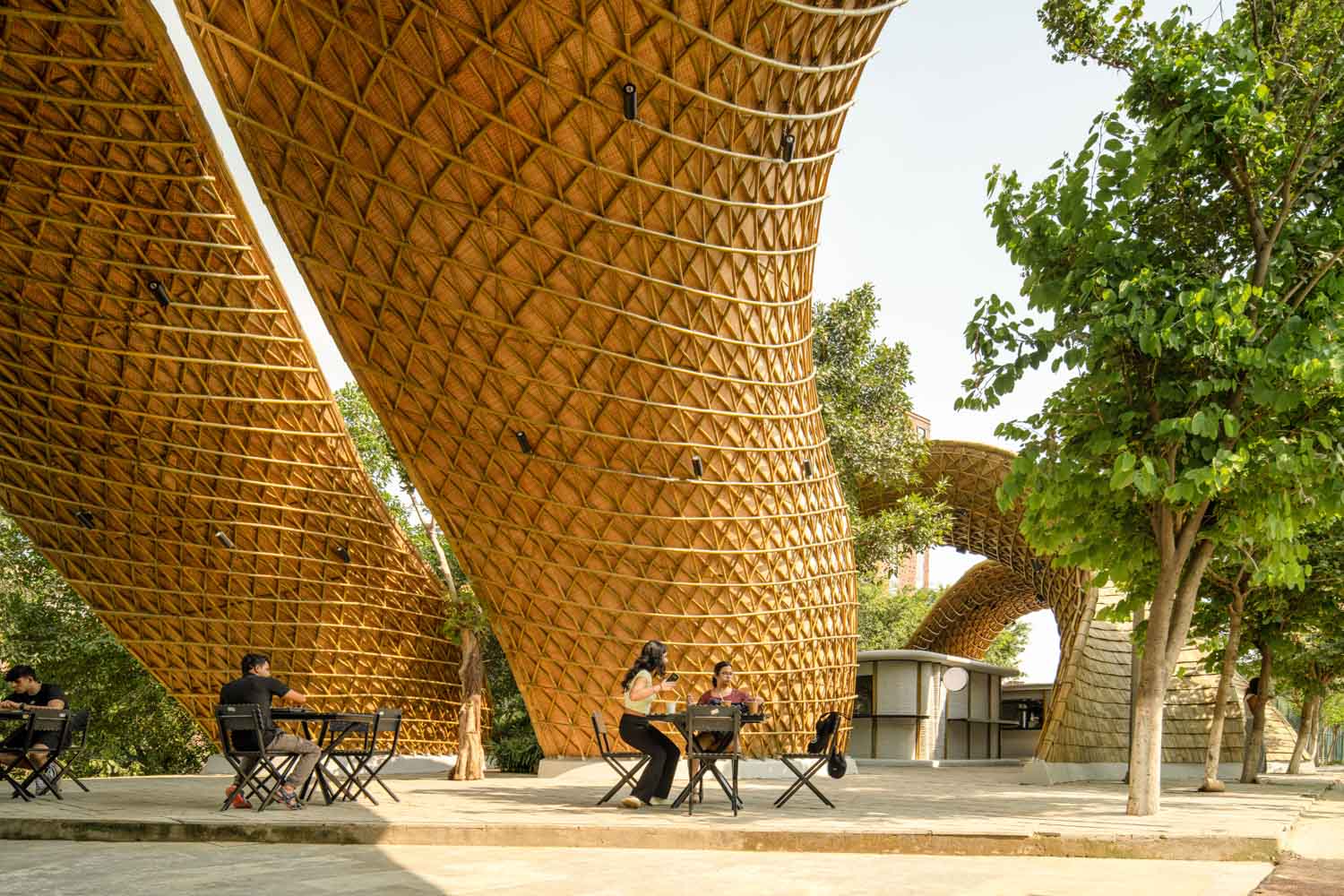
Sustainability continues at the level of everyday interaction. The seating, developed by Placyle, is crafted entirely from recycled plastic waste. Discarded plastic is transformed into durable, weather resistant furniture, addressing landfill overflow and marine pollution in a tangible way. What might otherwise pollute oceans or accumulate in landfills becomes part of a communal gathering space. Here, sustainability is not an abstract ideal but an embedded practice.
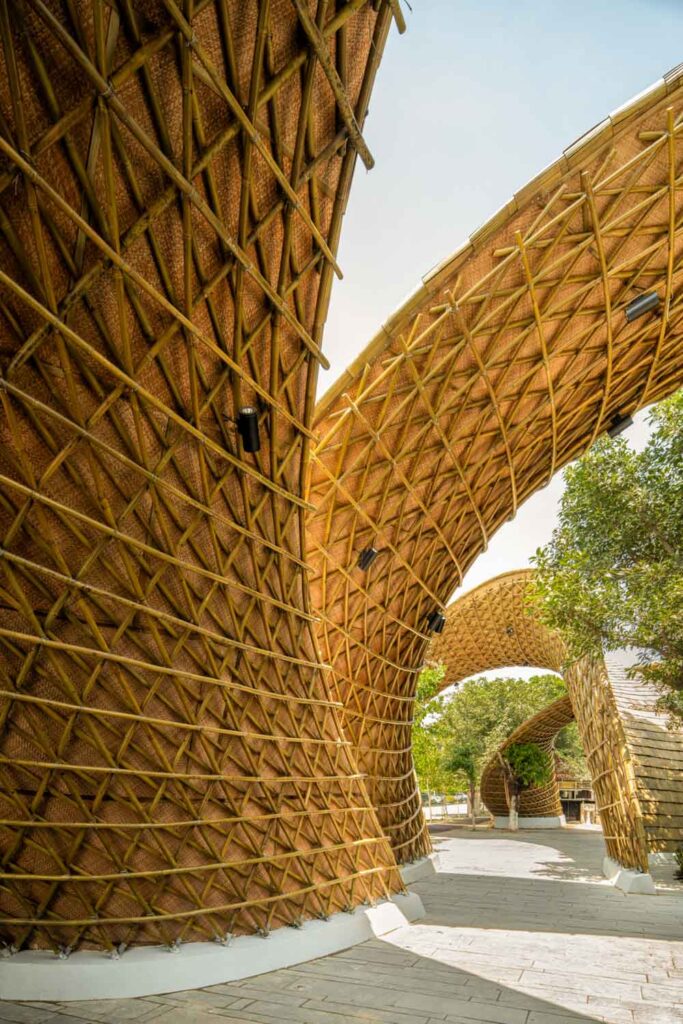
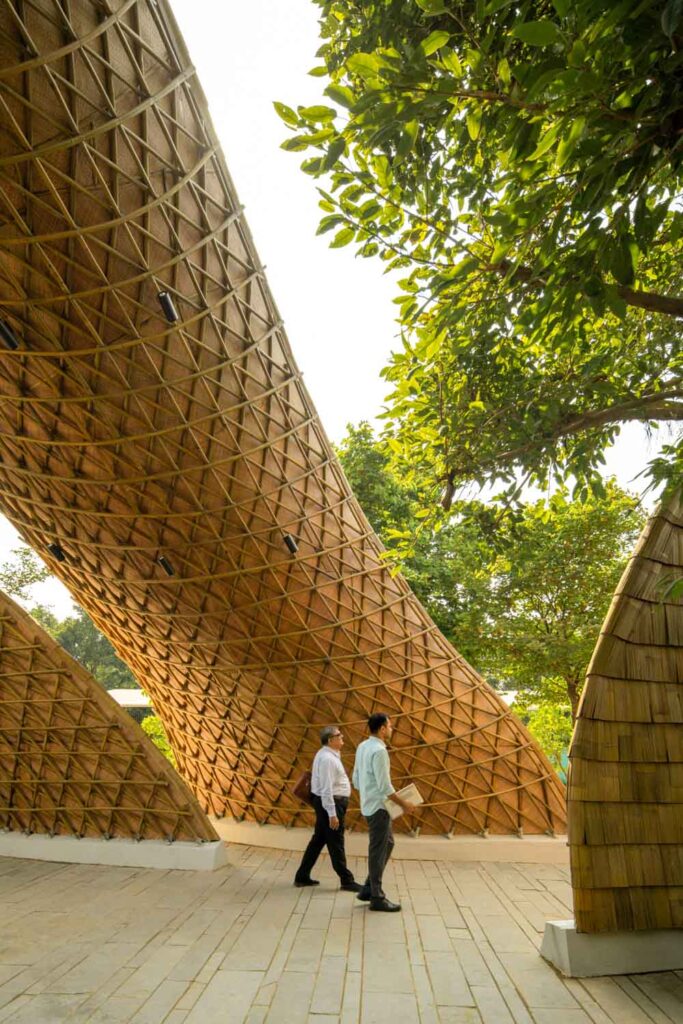
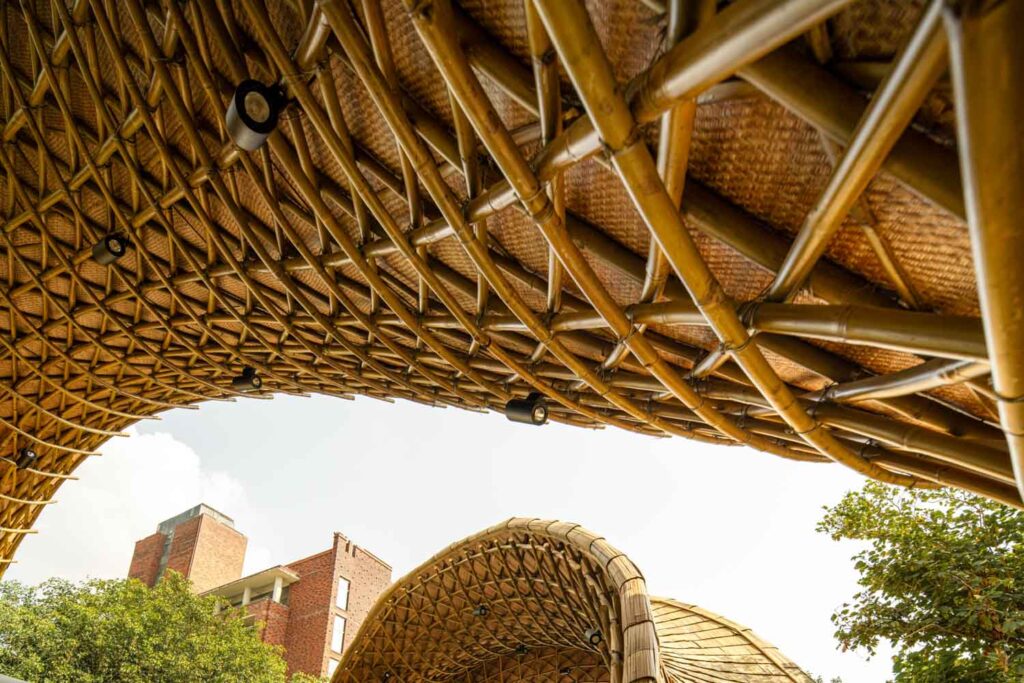
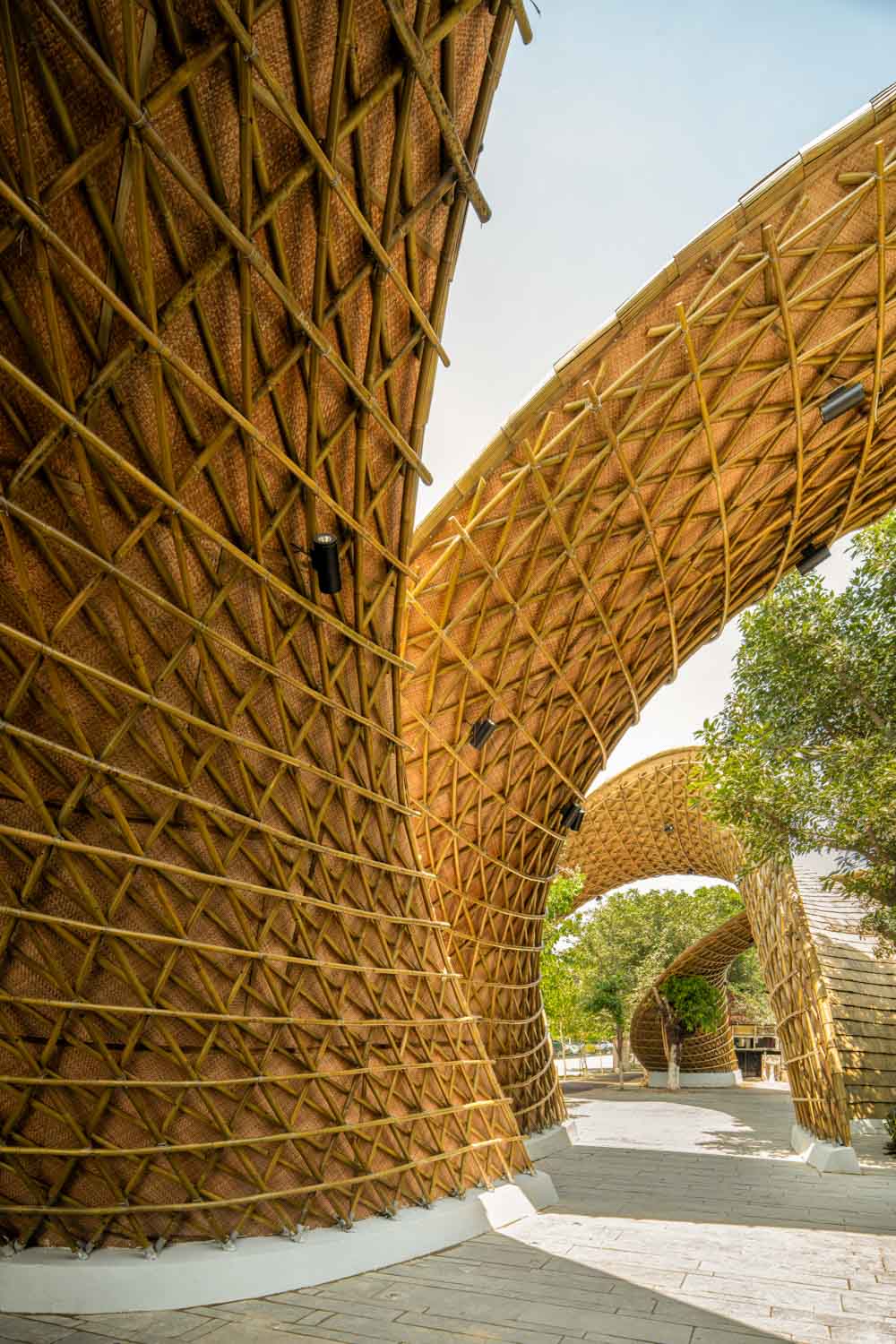
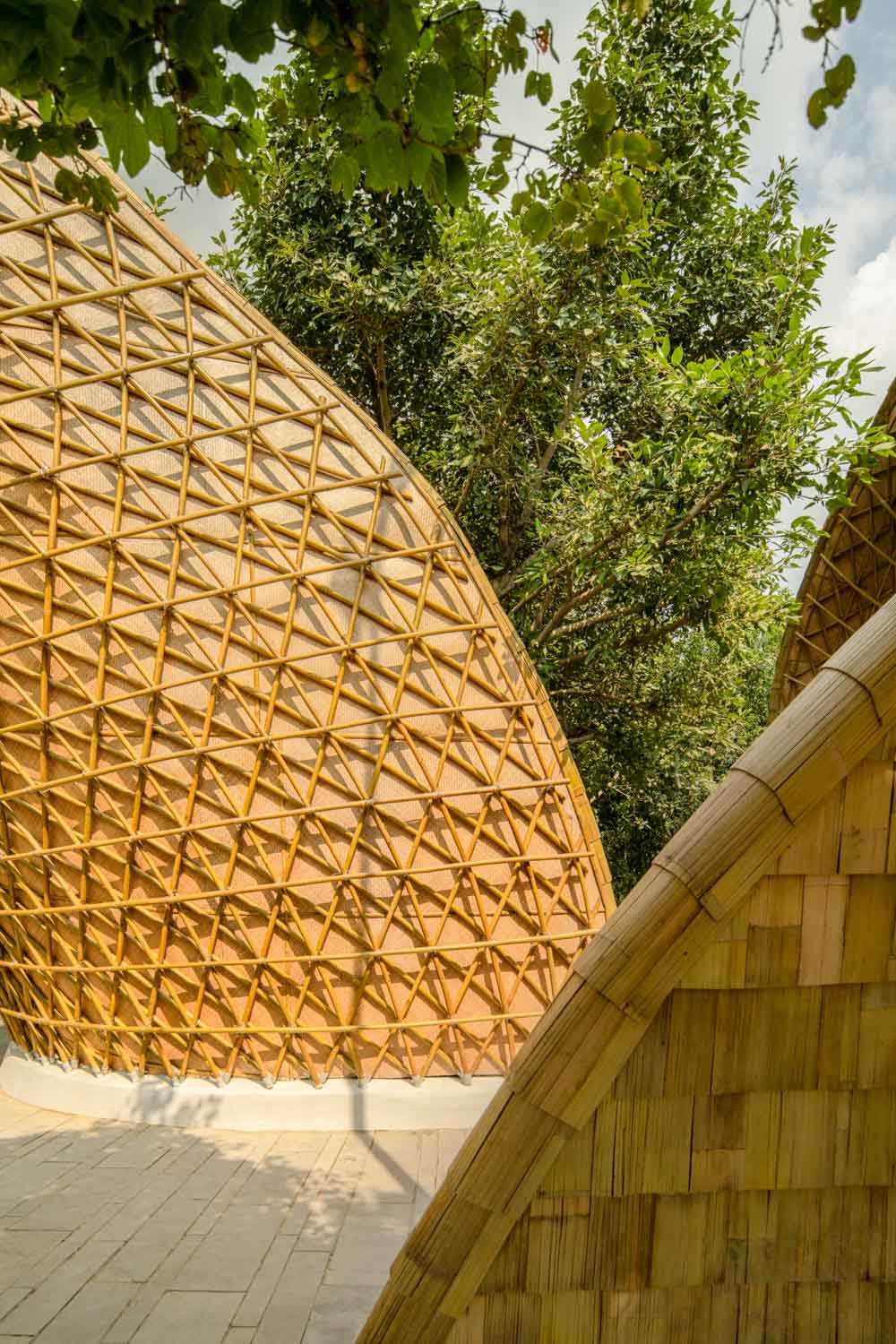
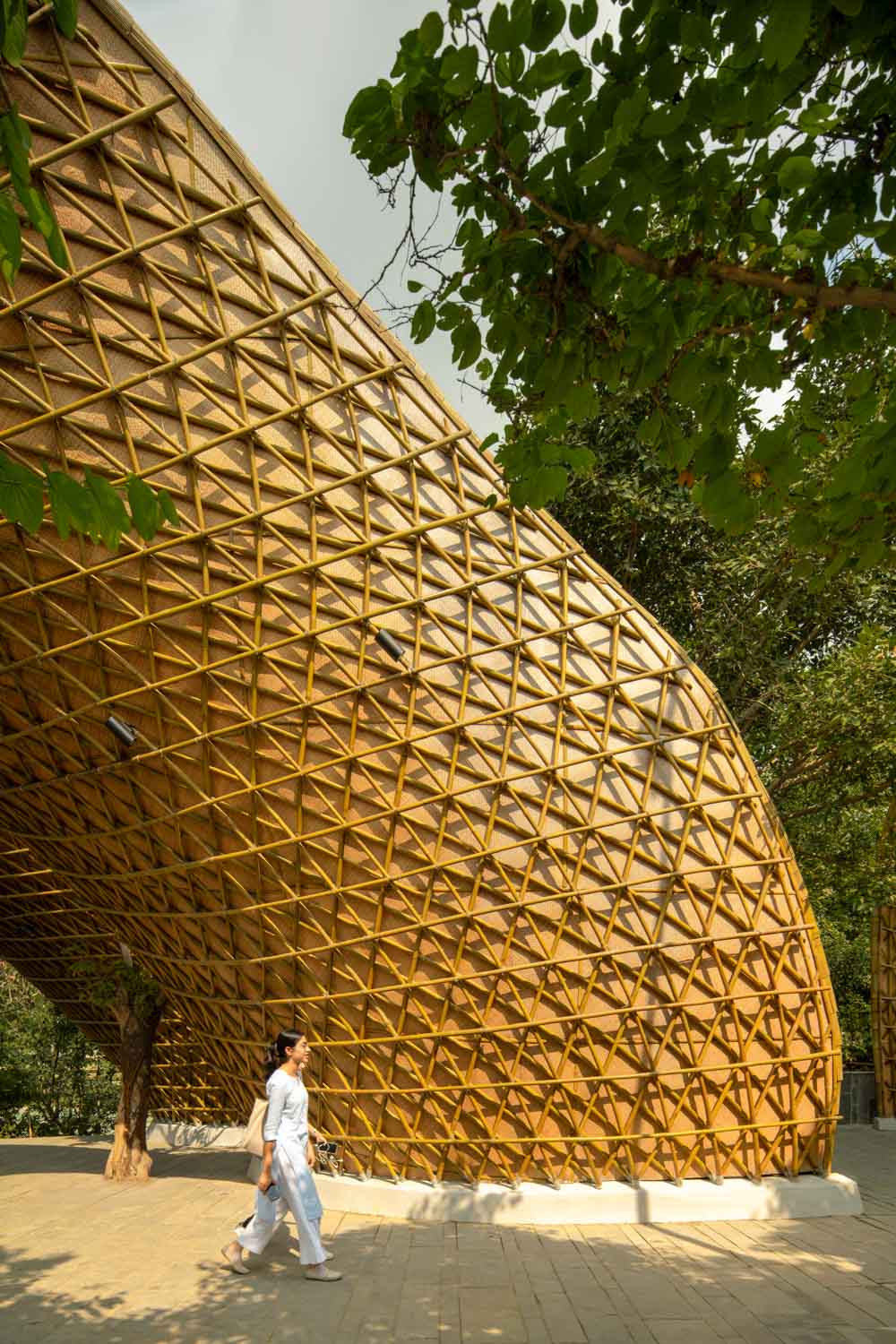
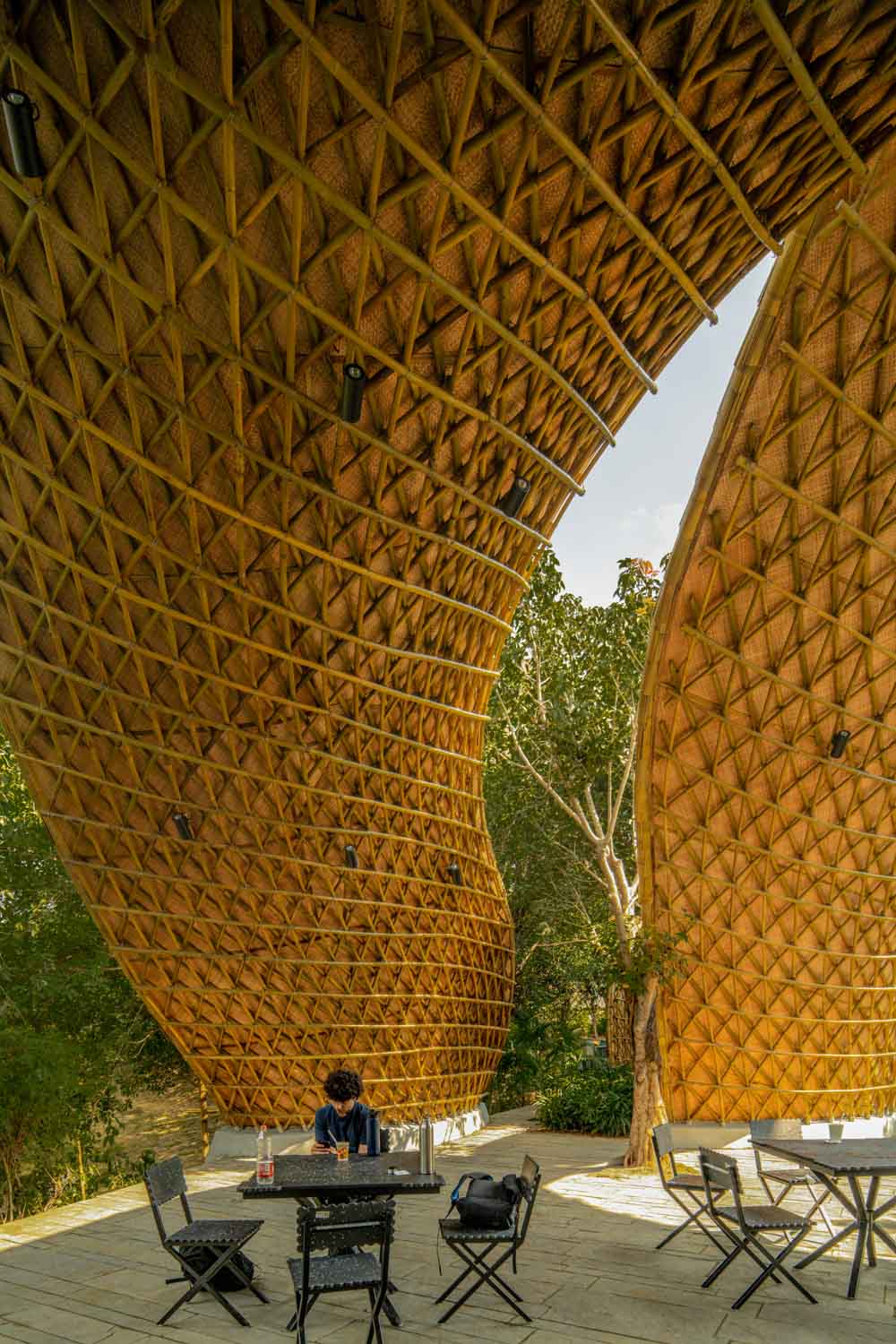
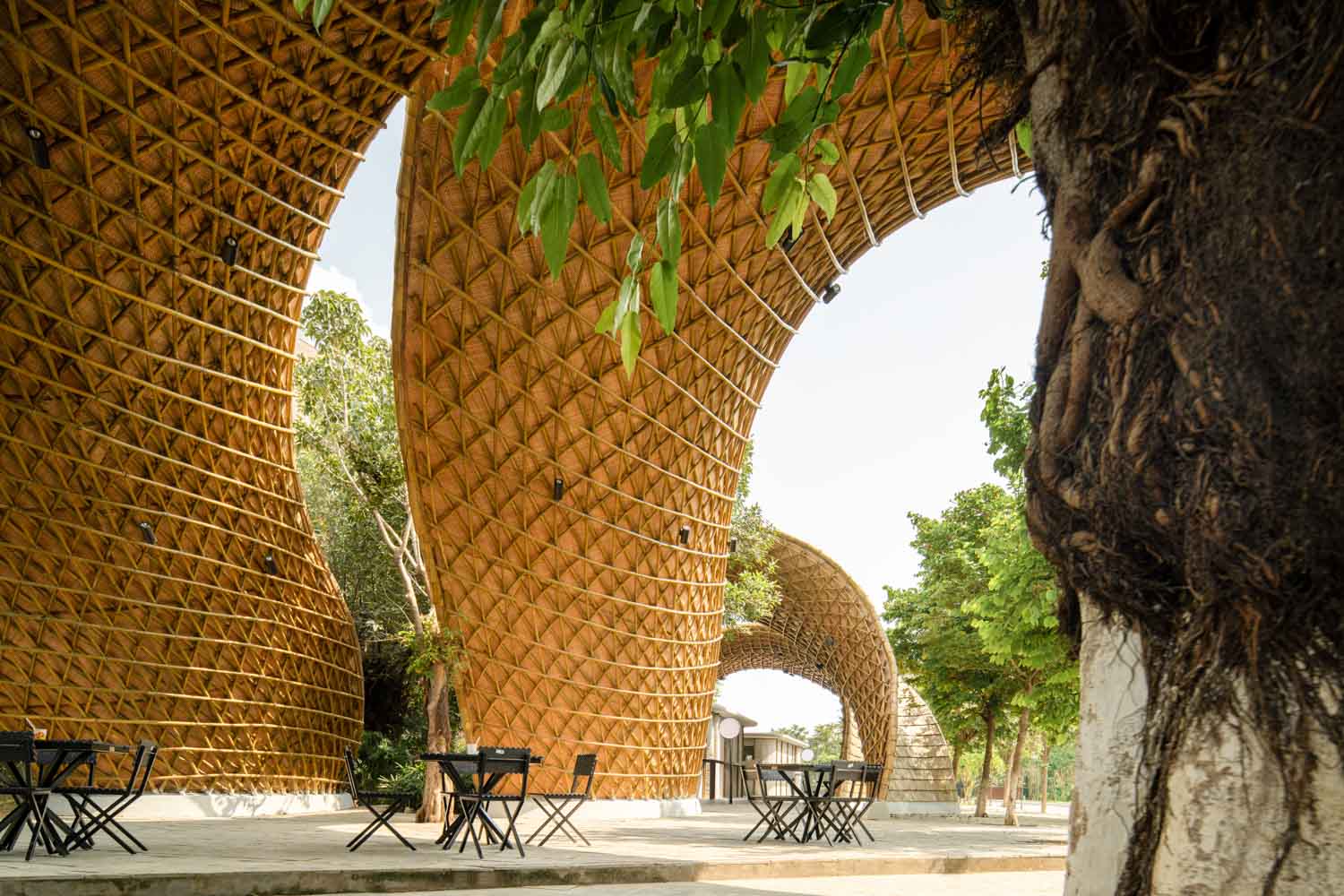
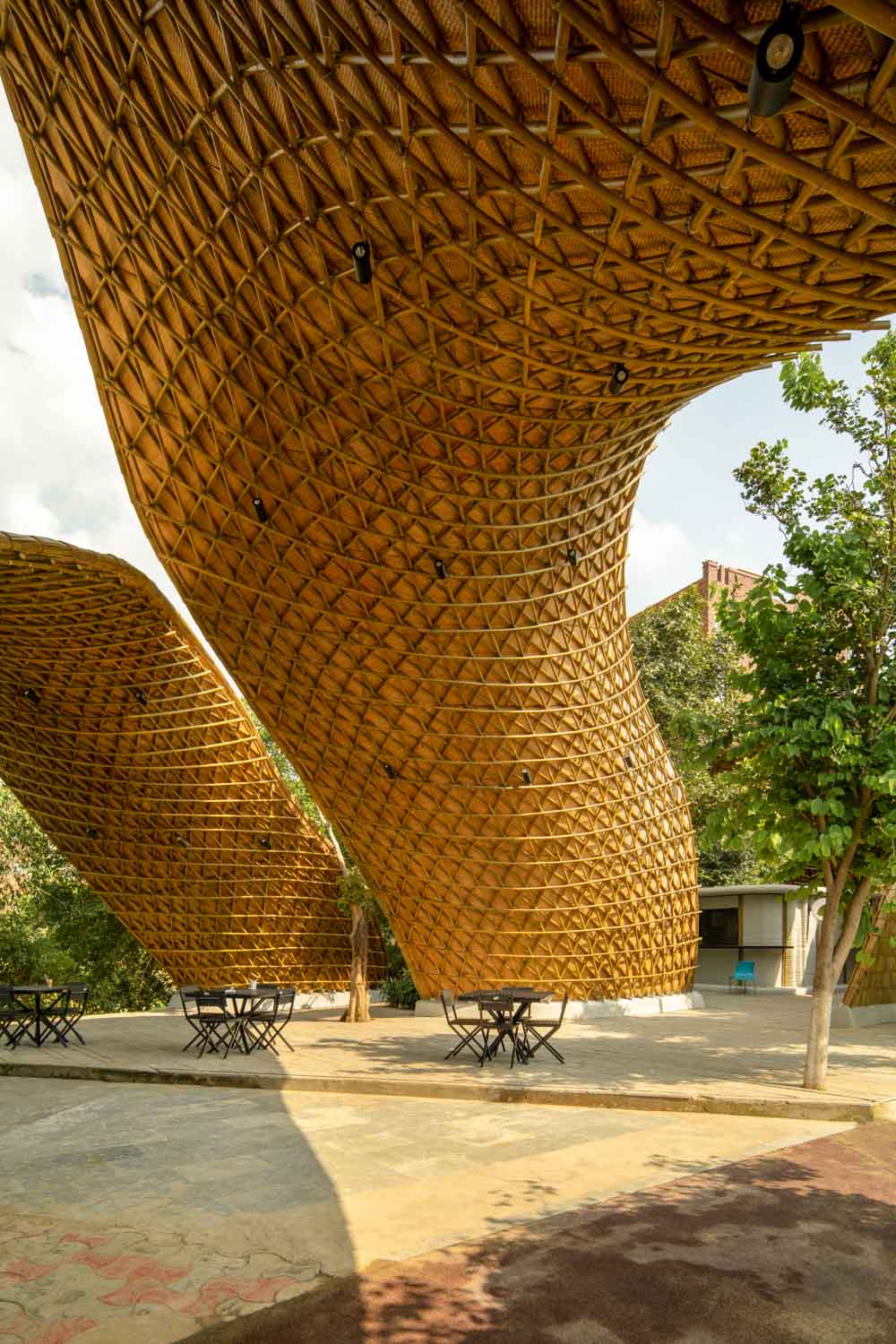
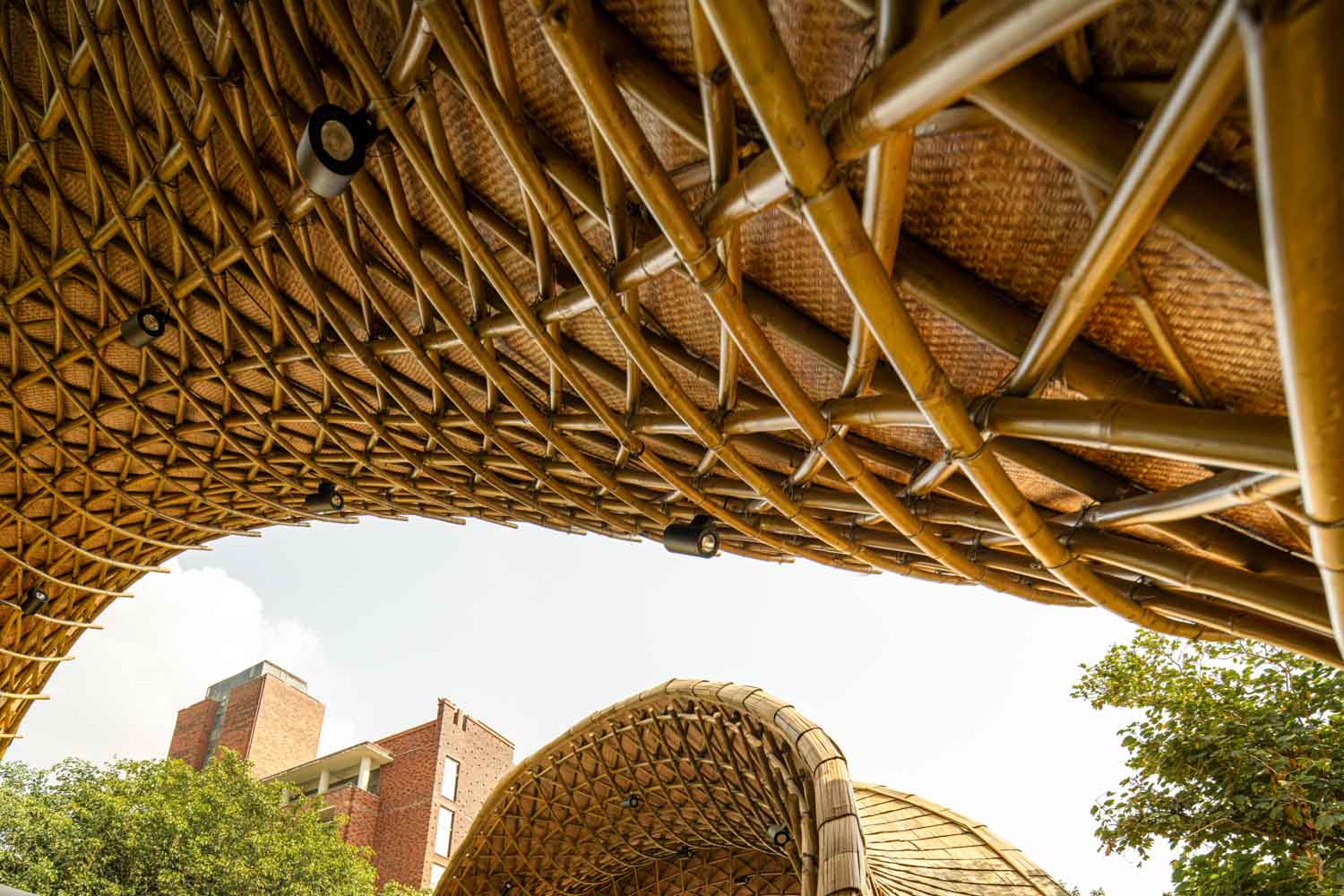
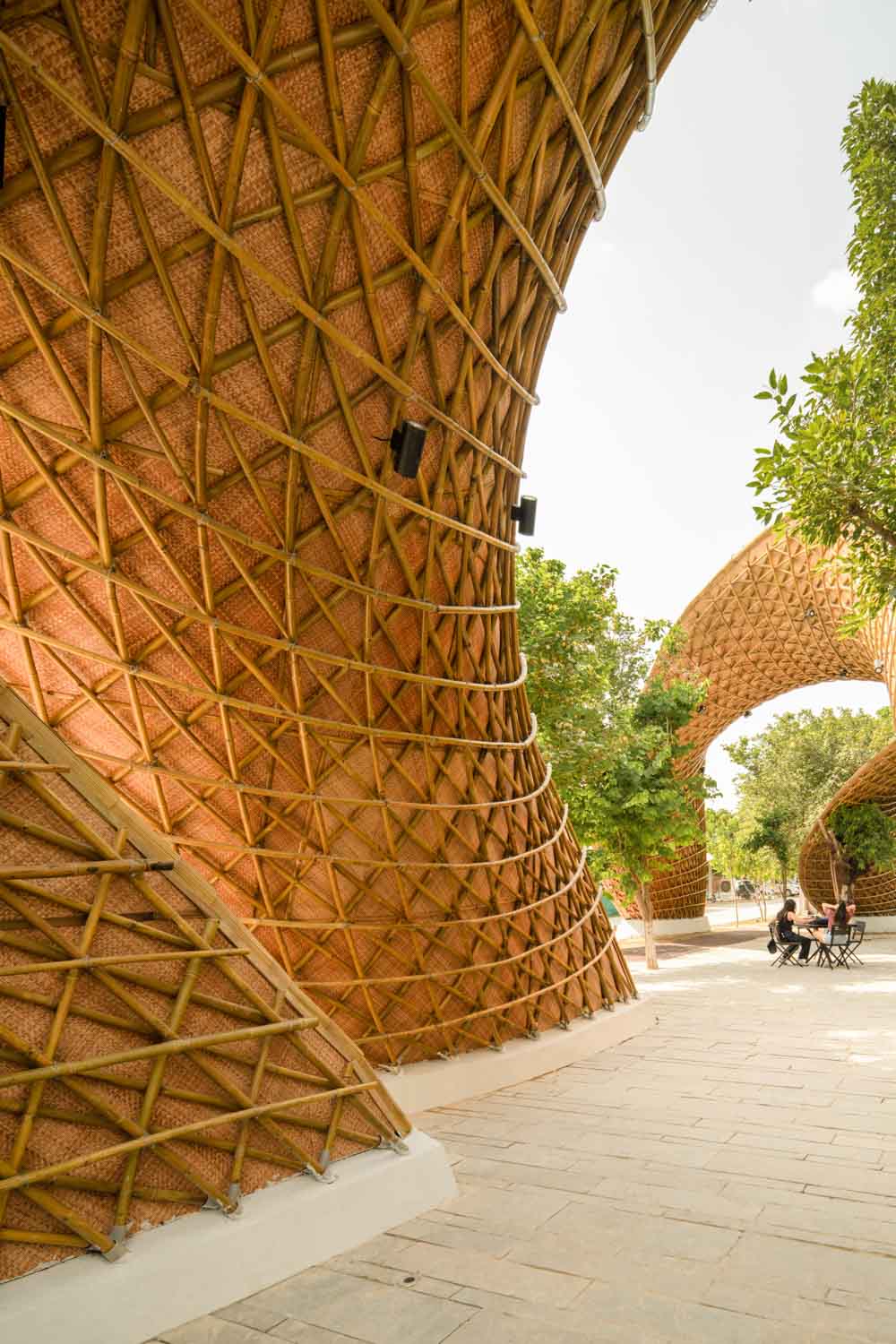
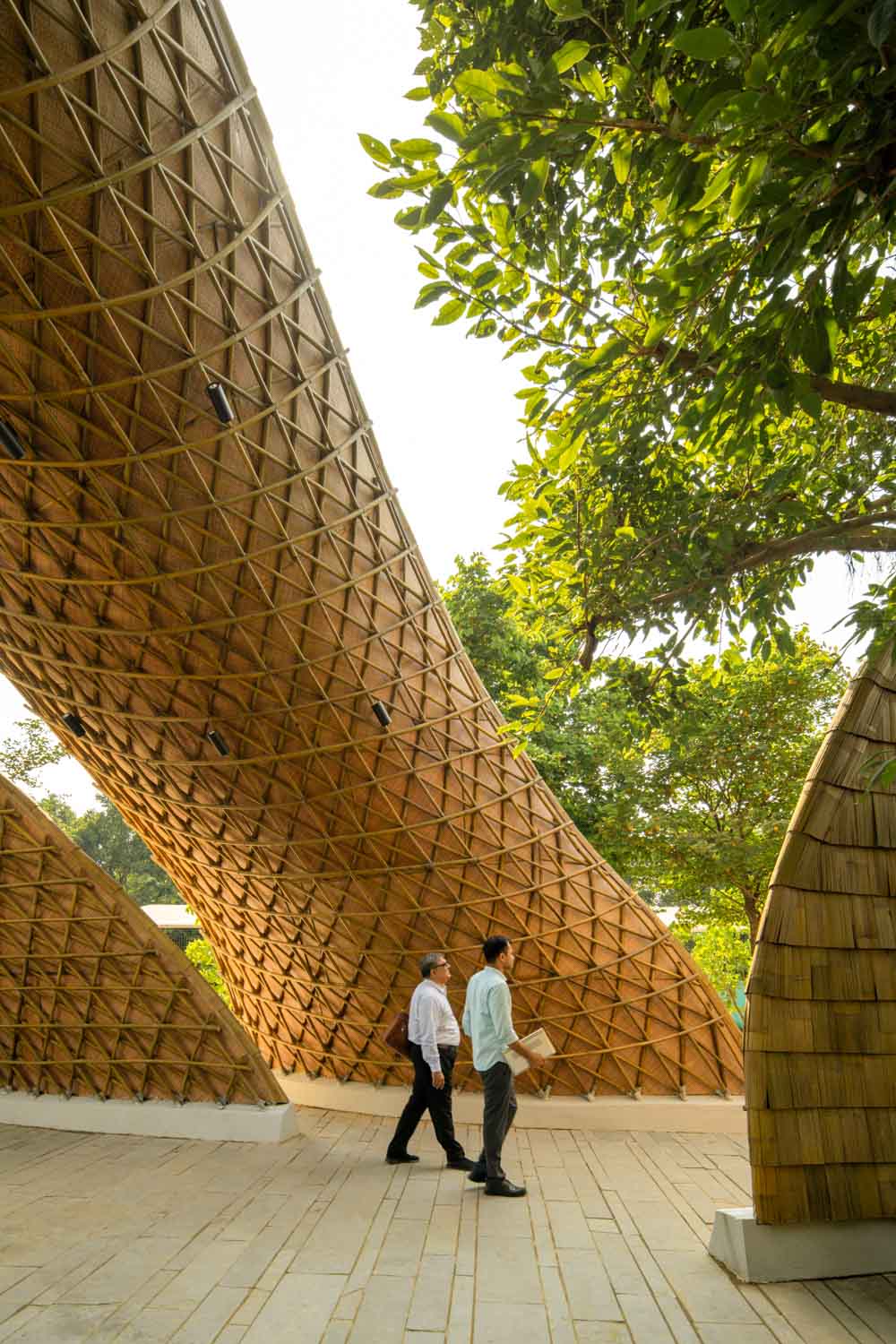
Above, the defining architectural gesture unfolds. The shading structure takes inspiration from the geometry of a folded leaf, curving gracefully in two directions to create a lightweight yet resilient bamboo gridshell. The form evokes the protective enclosure of a caterpillar’s cocoon, filtering light while offering shelter. The longest shell spans nineteen metres and is constructed from four layers of bamboo poles ranging from thirty to fifty millimetres in diameter, each oriented at forty five degrees. A crushed bamboo mat crowns the assembly, reinforcing the surface while maintaining material honesty.
The slenderness of the bamboo elements enables the complex double curvature, resulting in a structure that feels organic and alive. Structural design was led by Atelier One in London, with architectural detailing by Jurian Sustainability and execution by Jans Bamboo. Together, they translated a conceptual sketch into a built form that balances expressiveness with efficiency.
Throughout the day, light filters through the woven bamboo, casting shifting patterns that animate the space below. Children gather, conversations flow, meals are shared, and the architecture quietly performs its ecological role. The Hungry Caterpillar is not simply a themed installation. It is an ecosystem of ideas, where advanced technology, traditional craft, and environmental ethics intersect.
Ultimately, the project demonstrates that delight and responsibility need not be opposing forces. It is a space where design nurtures curiosity and community while remaining conscious of its footprint. The caterpillar becomes more than metaphor. It becomes a reminder that growth, transformation, and care are essential to the future of our built environment.
Project Name : The Hungry Caterpiller
Project Location : Sonipat, India
Architect/Interior Designer : Lyth Design
Principal Architect/Designer : Apoorva Shroff
Photographer: Avesh Gaur and Sohaib Ilyas